
Household product alternatives to plastic-made
These days seems that it is virtually impossible to avoid plastic in our daily lives but with a few alternatives we can make it happen.

It is virtually impossible to avoid plastic in our daily lives. Plastic is at our fingertips all day long. From the toothbrush, the shower curtain, your personal care products, your take-out lunch, to your keyboard and your water bottle. Over the last ten years the US has produced more plastic than during the whole of the last century, and it sadly accounts for around 10% of the total waste generated.
Since we pretty much depend on plastic and don’t think twice in storing food in the mismatched Tupperware that inhabits in the cupboard, here are some facts to make you reconsider replacing plastic with eco-friendly alternatives:
It is believed that 90% of all the trash floating in the ocean is made up of plastic.
Researchers have found that plastic debris acts like a sponge for toxic chemicals, soaking up in higher concentration deadly compounds like PCBs and DDE. These particles become highly toxic poisons to marine animals who frequently consume them.
Plastic bags can take up to 1,000 years to break down, so even when an animal dies and decays after ingesting a bag, the plastic re-enters the environment, posing a continuing threat to wildlife.
Only 14% of plastic water bottles are recycled. Americans consume 190 billion sodas, juice drinks, and other beverages packaged in plastic or glass bottles and aluminum cans each year. That’s over 650 containers per person per year—or almost two containers a day for every person living in the United States. *
The average life expectancy of a toothbrush is about 75 years, and each of us will throw away about 12 pounds of plastic toothbrushes in our lifetime
Straws can’t be recycled and most people only use them once. In the U.S., we use 500 million straws a day, enough straw waste to wrap the circumference of the earth 2.5 times or to fill the Yankee Stadium over 9 times in a year.
Old habits are hard to break but it is worth the effort to minimize the use of plastic when you read about these crazy facts.
Most of the plastic products we commonly use can be replaced with an eco alternative like the ones below:
Sponge Cloths
The alternative to sponges (normally made of plastic polymers) or to paper towel for that matter, is a reusable sponge cloth or dishtowel. Sponge cloths are made of 100% natural cellulose, a material derived from wood pulp, which is a renewable resource. Just like a dishtowel that you can reuse several time to clean up spills, the sponge cloth is super absorbent and you can wash it and reuse it many times, plus it is sturdier than regular paper towel.
Reusable Snack Bags
These snack bags and sandwich sacks provide an environmentally friendly alternative to regular plastic sacks. Yes they are made of plastic, but free of BPA, PVC, latex and phthalates and are easy to clean and very convenient to take with you since they are sturdier than regular plastic bags. They come in sets of four (two sandwich and two snack bags), and allow people to cut back on paper and plastic waste.
Bees Wrap
Bees Wrap was created as a more sustainable way to store our food. By infusing organic cotton with beeswax, organic jojoba oil, and tree resin, a washable, reusable, and compostable alternative to plastic wrap was created. It has a beautiful honey scent and it hangs on very well to bowls and works well as a wrapper for anything that you used saran wrap for. At the end of your wrap’s useful life in the kitchen you can reuse it as I fire starter!
Bamboo Toothbrush
Bamboo is naturally antibacterial and water-resistant, making it ideal for your toothbrush handle.
Baggu Reusable Bags
These are made from 100% ripstop nylon and are machine washable. Each bag can hold 2-3 plastic grocery bags worth of groceries. After each use you can fold them into a flat 5 in. x 5 in. pouch and store them in an orderly manner. Click here to see the different styles.
Stainless Steel Straws
Straws are such an unnecessary evil but it seems no cocktail or smoothie can’t go without one. Stainless Steel straws look stylish, are BPA-free and are the non-toxic alternative to disposable plastic drinking straws. They are manufactured from high quality grade food safe stainless steel so it is durable and dishwasher safe too. They come with a small brush that you can insert for thorough cleaning.
Bambu Spork
It is the best alternative to plastic silverware and since it is made from a single piece of bamboo, it doesn’t need glue or lacquers so it is safe to use with your organic food. Its size and weight makes it super portable and considering that it’s made from bamboo it’s naturally antimicrobial, stain resistant, and won’t retain stinky odors.
Weck Jars and Mason Jars
The green smoothie and pressed juices “movement” put the mason jars back in the radar. If you are still using plastic to store your food you are not only ingesting BPA but those containers will take years to decompose. Both mason jars and weck jars will keep your food fresh and will make it easy to take on the go and rinse off. The weck jars are easy to stack to save space and both can be used to store more than just food. Click here for more ideas on how to use weck jars and here for mason jars.
*Center for Climate and Energy Solutions
Recipe: Kale Chips
Some people are over kale but they are missing out on its healing properties and how delicious kale chips are.

Kale is a secret weapon against inflammation and chronic pain. Some people are so over kale, that they are missing out on its healing properties. Its anti-inflammatory compounds destroy viruses and promotes the production of healthy new tissue. And on top of that, Kale is rich in omega-3 fatty acids, chlorophyll, amino acids, vitamins A, C, E, K, B-complex and minerals such as iron, magnesium, copper, and potassium. That is why it became very popular among vegans and vegetarians. Smoothies are not the only way to take advantage of the benefits kale offers, so bake some kale chips and enjoy them while you Netflix binge.


Kale Chips with Vegan Cheese
-----------------------------------------------------
INGREDIENTS
1 bundle curly green or purple kale (the purple variety has a milder flavor)
1-2 Tbsp (15-30 ml) melted coconut oil (olive oil and avocado oil are other options)
Brazil nuts to grate on top as vegan cheese – however all these seasonings are a perfect choice
Himalayan salt
Nutritional Yeast
Curry Powder
Cumin
Chili Powder
Onion Powder
Cayenne Pepper
Or a mixture of a few like Himalayan Salt, Curry Powder, and Nutritional Yeast
PREP
Preheat oven to 300F
Rinse and thoroughly dry kale
Tear the leaves into pieces
Compost the stems or freeze them for future use in smoothies or soups
Add kale leaves into a large mixing bowl
Drizzle the oil and massage well until every leaf is covered.
Sprinkle the seasonings -except the brazil nuts, they taste better after the kale is baked
Spread out the kale onto a baking sheet making sure is not to overcrowded
Bake for 10 minutes and then rotate the pan
Bake for 10-15 minutes more until the kale begins to firm up
The kale will shrunk and the leaves will golden
Approx 25 minutes kale should be ready
Let it cool so it’s crispy enough - while it cools, grate the Brazil Nuts on top. It will resemble parmesan cheese. If you eat cheese, grate parmigiano reggiano or pecorino.
TIPS:
Bake at low temperature to ensure crispiness
Make sure kale is completely dry before baking
Add any liquids like tamari sauce after the kale has cool to avoid sogginess
Layer some rice inside your container to absorb humidity
May last up to 3 days - depending on the seasonings you chose.
DIY: A Succulents Mini Garden
If you don’t have a green thumb, succulents are the best answer. Here are 10 steps for a small terrarium.

If you don’t have a green thumb, Succulents my friend, are the answer. They thrive by the sun and need little water. Succulents are the friends of frequent travelers. Your neighbor says that he/she will water your plants and she may either forget or eagerly water them too much.
Succulents are the best alternatives for an eco home, in these days of draughts you can water them once a month if necessary. You can even keep them in the bathroom, as the moisture will be enough to keep them alive.
To do your own succulent garden, you need a few things that you can buy at a flower shop, craft store, or home improvement store. One important thing to remember: You can choose a terracotta, glaze ceramic, or glass pot. But if you choose glass you need to be very careful how often and how much you water it. A terra cotta or ceramic pot will provide better air flow and allow the soil to dry out easily. Or choose a container with a hole in it for water drainage.
Here is what you will need:
A variety of Succulents depending on the size of your pot/container
Moss
Rocks, pebbles, gravel, or river rocks
White Sand Soil Cover - like this
A container of your preference
Wood pieces for decoration

Instructions:
1.- Distribute the sand evenly in the container – fill 1/3 of the container.
2.- Place some rocks for drainage as a second layer.
3.- Add more sand – it will cover the rocks
4.- Make holes with your finger where you will be placing the plants
5.- Gently pull each succulent from the container – make sure to not disturb the roots - and place each one in the holes you made
6.- Cover the soil with the rest of the sand – you shouldn’t see the soil
7.- Sprinkle the gravel or place the rocks of your choice around the succulents
8.- Arrange the moss around the succulents – it helps with moisture. Moss comes in a variety of colors to match your decor.
9.- Add wood pieces or any other item you would like for decoration
10.- Lightly water your succulents
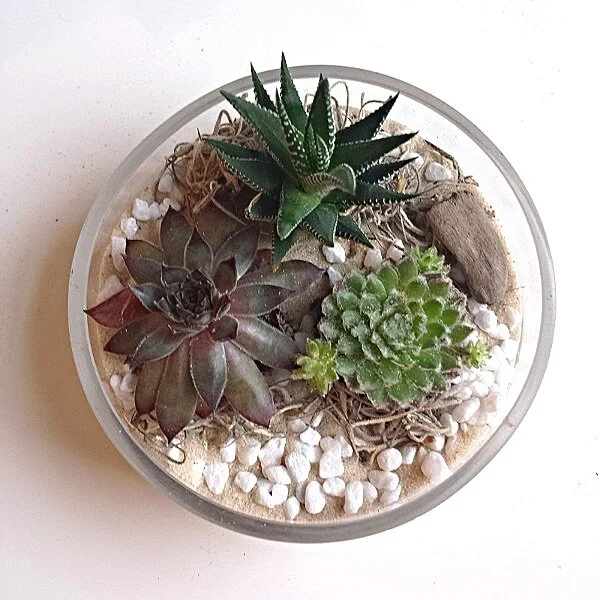
Tips:
Always water from the top onto the leaves - using a spray bottle is recommended
It is normal if the lower leaves, near the bottom of the stem, shrivel up and die. Just removed them from your garden.
If your plants develop bugs, you may have watered them too much. Stop watering them and use a combination of water and alcohol and spray them to kill any bugs.
Do not allowed for the A/C vent to hit directly on them.
Is Your Mattress Toxic?
Conventional mattresses are made from petrochemicals, synthetic materials and chemical additives. Since we spend one-third of our lives in bed, a better option is a mattress made from natural materials like wool, latex, organic cotton, or bamboo
![[photo credit: Coco Mat USA]](https://images.squarespace-cdn.com/content/v1/557f4891e4b016b020ff2427/1594497761174-9WIEDZ83JMK9BVQVB7KS/MATTRESS%2BCOCO.jpg)
[photo credit: Coco Mat USA]
Most mattresses in the market today are made from petrochemicals, synthetic materials and chemical additives. Yes they are, made out of all those names that are hard to pronounce and that we actually find in pesticides and insecticides like roach killers.
You may think that our bodies can’t tell the difference, but that “new” smell that comes with your mattress is off gassing tons of chemicals into the air that you breathe and those poisonous chemicals like flame retardants can pass through the mattress covers.
It is required by Federal law that all mattresses contain fire-retardant materials (because some people fall asleep while smoking) and the most common way to make mattresses fire-retardant is to douse them in toxic chemicals that can cause lung and heart problems, skin irritations, and other issues.
Below are a few of the toxic chemicals that can be found in conventional memory foam mattresses:
Antimony – Also found in vinyl and PET plastic bottles, is applied inside the fabric of the mattress as fire retardant.
Boric Acid –Also added to interior fabric is bad for the eyes, lungs, and causes irritation.
Vinyl – Used to make mattresses waterproof, contains phthalates and heavy metals.
Polyurethane foam – another plastic used in the internal structure and since it burns easily it requires fire retardants.
Formaldehyde – Commonly used as an industrial fungicide, germicide, and as a preservative in mortuaries serves as an adhesive and causes allergies, asthma, and cancer.
Just like there are organic fruits and vegetables free from harmful chemicals and pesticides, there are mattresses that qualify as organic. Since we spend one-third of our lives in bed, a better option is a mattress manufactured out of natural materials like wool, latex, organic cotton, bamboo, and/or coconut fibers.

![[phot credit: Savvy Rest]](https://images.squarespace-cdn.com/content/v1/557f4891e4b016b020ff2427/1440448546472-18UMTAEHU4OVY1KLGMCT/image-asset.jpeg)
[phot credit: Savvy Rest]
If you are in the market for a new mattress, below is a list of brands of organic mattresses to choose from:
SAVVY REST
Organic mattresses made with layers of natural latex foam rubber, organic cotton, certified organic wool in a wide range of custom combinations.
OMI
Poduces luxury certified organic mattresses and bedding, proudly handcrafted in America from the highest quality sustainable raw materials available.
ROYAL PEDIC
Luxury mattresses made with the finest natural materials from around the world, from pristine long staple cotton, to natural latex sourced from sustainable plantations, to the exuisite comfort of all natural lamb’s wool.
AVOCADO
One of the most popular brands and affordable natural mattresses on the market made with 100% GOTS organic certified cotton & wool, 100% natural latex
COCO MAT
Coconut fiber, provides adequate support for the body’s weight, while the more elastic layers of natural latex follow the body’s shape.
AWARA
Made with a layer of Rainforest Alliance-Certified Dunlop latex coupled with premium coil springs that adjust to your body’s unique curves and 100% Organic Wool fiber from New Zealand.
SAATVA
Handcrafted with the highest quality materials, including antimicrobial organic cotton, CertiPUR-US certified foams, and eco-friendly components and all of mattresses come with a 120-night home trial.
BIRCH
This NYC-based brand is OEKO-TEX and Rainforest Alliance certified and made with organic, natural, hypoallergenic, and anti-microbial materials, including a natural cotton cover, hygroscopic wool and sustainably-tapped latex.
Steps for a Conscious lifestyle
The general belief is that leading a more conscious life is either difficult or expensive. The truth is, it could be daunting if you don’t know where to start or without the proper research.

The general belief is that leading a more conscious life is either difficult or expensive. The truth is, it could be daunting if you don’t know where to start or without the proper research. You can take small steps and buy vegetables from the dirty dozen list, replace your conventional body lotion for a certified organic one, and commit to recycle all plastic bottles or ban their use all together.
Here are easy steps to follow for your home, your kitchen, your closet and your personal care items. You can pick and choose which one you want to apply to your daily life, but if you want to apply them all, more power to you.
HOME
Recycle
Plastic lasts forever and most likely it ends up in the ocean, like in the Great Pacific Garbage Gyre. Recycle all your plastic bottles and cans, and remember that you can even recycle old batteries, ink cartridges, and wine bottle corks.
Cleaning Products
All conventional cleaning products are full of toxic ingredients that are known hormone disruptors or carcinogenic. The easiest and most affordable method to clean? White vinegar and water. Vinegar contains 5% acetic acid, which has antimicrobial properties. You can use a mixture of water and vinegar as a produce wash, to disinfect and clean the floor, windows, mirrors, glass, counter-tops. If you are not into DIY, you can find safe brands to buy at Grove Collaborative.
Organic Cotton Bed Sheets
Cotton farming uses more pesticides than any other area of agricultural production. In addition, cotton sheets labeled “Wrinkle-Free”, “Easy Care” and “Permanent Press” indicate that the fabric has been treated with formaldehyde resin, one of the most toxic chemical fabric finishes designed NOT to wash out. You can find organic cotton bedsheets from the following brands: Coyuchi , Alterra Pure, Farm to Home, West Elm, American Blossom Linens
FOOD
Dirty Dozen & Clean 15 Fruits and Vegetables
The EWG (Environmental Working Group) has created a practical list to get you started on shopping organic produce and avoid pesticides. Save money by buying organic fruits and vegetables from the Dirty Dozen List (the ones with the most pesticides residue) and stick to conventional fruits and vegetables from the Clean 15 List. A rule of thumb: if you can peel it, eat it.
Meatless Monday
Did you know that 2,500 cows produce the same amount of waste as a city of 411,000 people? And that it requires 660 gallons of water to make 1 hamburger? That is the equivalent of showering daily for 2 entire months. Animal agriculture is eroding the health of the planet and you can help by consuming less meat. Meatless Monday was created to create awareness about this issue plus skipping meat one day a week is good for your health and fantastic for the planet. Click here to get recipes from the Meatless Monday’s website.
Dairy without Hormones
Choose dairy products that are free from the hormone rBGH -a genetically engineered artificial hormone injected into dairy cows to increase milk production. Everything that goes in to the cows goes into your body. Many studies have noted links associated between this hormones and the risk of cancer, especially breast and prostate cancer, and also allergies. Choose brands like Horizon Organics, Organic Valley, or Whole Foods 365. Better yet choose plants based milks from almond, hemp, or coconut.
FASHION
Organic Cotton
As mentioned above, cotton farming is one of the most polluting industries in the world. Build your wardrobe by buying staples like t-shirts, underwear and jeans made of organic cotton or more sustainable fabrics like tencel, modal, and bamboo. These brands make wardrobe essentials from organic cotton: Pact, Yes And, Nudie Jeans.
Ethical Fashion
Be knowledable of where your clothes are coming from, many pieces are manufactured under poor labor conditions in countries like India and China. Check the brand's website to see if they have a transparent supply chain and details where the clothing is made and under which conditions. The Good On You app is a handy resource to use to identfy the best ethical brands.
Vintage and Thrift Stores
By buying second hand you keep old/used clothes from ending in landfills. Check out vintage stores, thrift stores, or E-Bay. You do not need to part from what you currently have in your closet, but if you don’t use it, either donate it or hold a “swap party” with your friends. This is the best way to refresh your wardrobe without spending a dime.
PERSONAL CARE
Skincare and Body-care
Check labels for things like Parabens, SLS, DEA, and Triclosan and avoid them at all costs. The retail store Credo has an extesinve list of ingredients to avoid. If you wish to swap your current products start with the products that you use the most like body lotion and shampoo. And before swapping your products, finish them and dispose of the empty bottles properly.
Get in the habit of making conscious purchases - ask yourself if you really need that extra pair of shoes or a new mascara. The idea is to become more conscious with the things you buy.
Sleep sweeter with organic bedding
Just like choosing organic food, natural bedding materials are key to our long-term health.

[photo credit: Grund ]
Just like choosing organic food, natural bedding materials are key to our long-term health.
Good quality sheets are an investment, but not only for you but for the environment. Conventional cotton farming uses more pesticides than any other area of agricultural production. Water run-off from cotton fields to rivers and lakes is common and the pesticides have a direct toxic effect upon wildlife.
Moreover, cotton sheets labeled “Wrinkle-Free”, “Easy Care” and “Permanent Press” indicate the fabric has been treated with formaldehyde resin, one of the most toxic chemical fabric finishes that is designed NOT to wash out.
If you decide to invest in sustainably made sheets these are a few of the certifications to look for:
Oeko-Tex® certification - The Oeko-Tex® Association is a global testing program that screens more than 300 harmful substances in consumer textiles, including toxins and irritants.
GOTS logo – Gots stands for Global Organic Textile Standard. Both certify textiles to be free of harmful chemicals, but GOTS takes it a step further and certifies that no harmful chemicals were used from harvest through manufacture, waste was disposed responsibly, and fair labor practices are enforced.
The Better Cotton Initiative (BCI) - BCI exists to make global cotton production better for the people who produce it, better for the environment it grows in and better for the sector’s future.
Fair Trade Cotton -Fairtrade-certified cotton guarantees farmers a fair price for their crop and is produced without using the harmful pesticides, child labor or forced labor.
In terms of brands, if you make a google search there are plenty to choose from, but I gathered a few below with different budgets, styles and décor in mind:
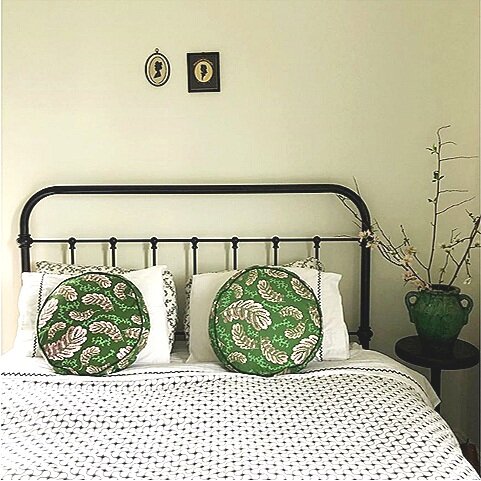

[photo credit: Left: Plover // Right: Delilah Home ]
Coyuchi - Organic, Fair Trade Certified, GOTS Certified. Crib sets available as well.
Ettitude - Made from 100% organic bamboo which is softer, cooler and more sustainable than cotton.
Delilah Home – Member of the Organic Trade Association (OTA) offers organic cotton and hemp and partners with local and national charities.
Sol Organic - 100% raw organic cotton, Fair Trade Certified, GOTS Certified.
Pact - Organic cotton and Fair Trade Certified.
Plover - Global Organic Textile Standard (GOTS) certified, Oeko-Tex's Standard 100 certified, and donates and partners with Save the Children.
West Elm - Organic, Fair Trade Certified, GOTS Certified, also available in tencel and linen.
Natural Mat - Unbleached and undyed organic cotton, GOTS certified and the Soil Association certified bedding for babies and kids.
Green Fibres - GOTS certified organic cotton, made under fair and safe working conditions for the whole family.
Grund – Luxury brand Oeko-Tex's Standard 100 certified and FSC .