
| 02 NATURAL WARDROBE
BUILT TO OUTLIVE YOU
Five fall classics designed to be worn, repaired and passed down.
WORDS BY NATHALIA ORQUERA * SEPTEMBER / 2026
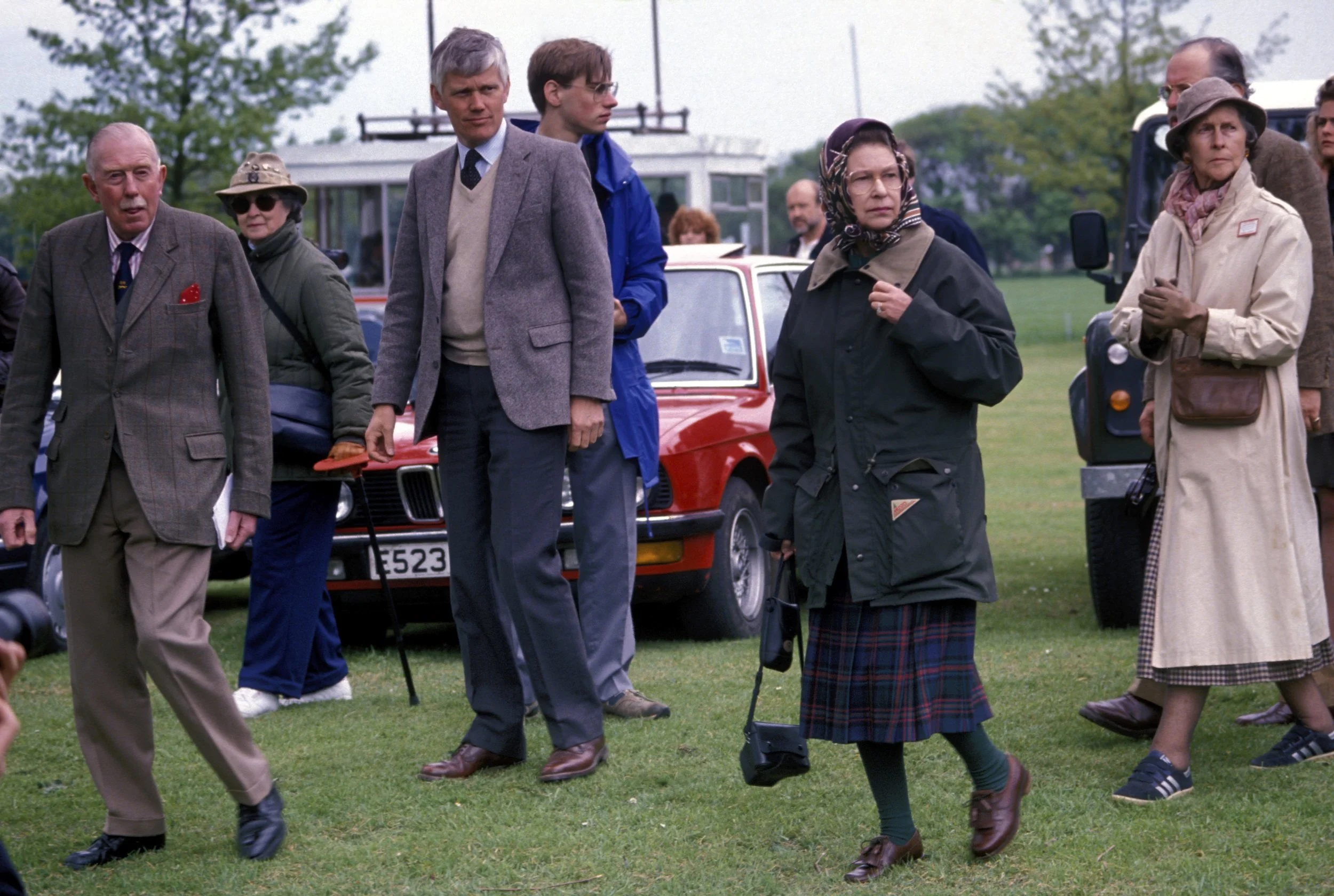
Image: © parkerphotography / Alamy
Some clothes look better after they have been lived in: a trench coat softened at the cuffs, a waxed jacket earned by years of rain, a tweed jacket that has only improved with age.
We tend to call these pieces timeless. But their longevity has less to do with fashion than with what they were originally asked to do. They were made for rain, wind, work, riding, country life - conditions in which a garment that failed quickly was simply a bad garment.
Long before sustainability became a marketing term, longevity was part of the design brief. Leather was resoled, waxed cotton reproofed and wool mended because continued use was expected. The more interesting question for a modern wardrobe may not be what to buy next, but what is worth keeping.
These five fall staples have very different histories, but they share something increasingly unusual: they make more sense with age.
THE TRENCH COAT
Today the trench can look almost inevitable: tan, belted, thrown over a suit, jeans, a dress, nearly anything. Its familiarity disguises how technical its origins were.
Thomas Burberry developed gabardine in 1879 and patented it in 1888, creating a tightly woven fabric that offered protection from rain while remaining more breathable and flexible than the heavy waterproof fabrics then in use. In 1912 Burberry patented the Tielocken, a belted coat widely regarded as a forerunner of the trench. The trench itself emerged from a broader history of British waterproof outerwear and Aquascutum also has an important claim in that history, and became closely associated with military officers during the First World War.
Many of the details we now read simply as “trench coat” began with function: epaulettes, storm protection, belting and hardware designed around movement and weather. What survived after the war was not the uniform so much as the usefulness of the idea.
That may explain why a good trench is difficult to date in a photograph. Proportions change, sleeves are pushed up, shoulders narrow and widen again, yet the coat remains recognizable. A century of fashion has altered remarkably little about its purpose: protection from bad weather with room to live underneath it.
The better lesson is not that everyone needs a new trench. It is that an old one may need very little to become useful again: cleaning, a repaired lining, a missing button replaced, perhaps nothing at all.

THE BARBOUR BEAUFORT
A waxed jacket is supposed to show its age.
J. Barbour & Sons began in South Shields in 1894, outfitting people who worked around the wet, exposed conditions of Britain's northeast coast. The Beaufort came much later. Designed by Margaret Barbour and introduced in 1983 for country pursuits, it has the familiar ingredients we now recognize immediately: waxed cotton, corduroy collar, roomy pockets and a generous cut designed for practical use.
Its most interesting feature today, however, may be what happens after the jacket leaves the shop.
Waxed cotton is designed to change with use. It creases, lightens and gradually loses protection where the body bends and rubs against it. Rather than treating this as failure, Barbour built maintenance into the garment's life, continuing to rewax and repair jackets decades after purchase.
A shiny elbow or pale crease becomes less a sign of damage than of use. Reproof the cotton, repair what has failed and the jacket continues.
This is perhaps the clearest example of what slow fashion can look like without announcing itself as slow fashion. The sustainable act may not be finding a newly marketed “sustainable” jacket. It may be taking the old one out of the closet and having it waxed again - then eventually giving it to someone who will do the same.
“Maintenance once sat closer to the idea of ownership than shopping ever did.”
THE CHELSEA BOOT
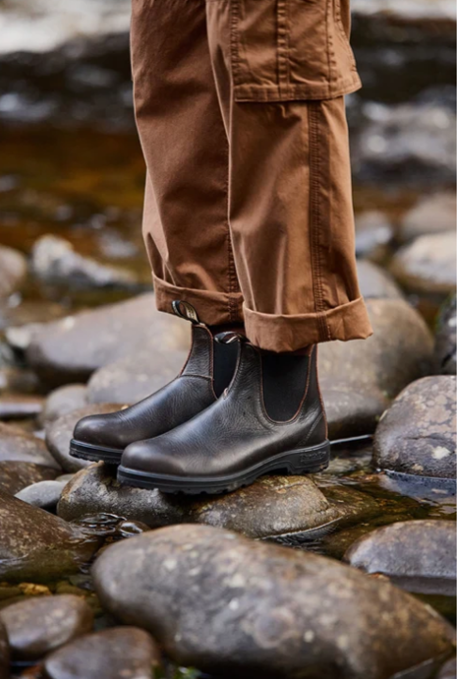
The Chelsea boot began with technology, not with Chelsea.
In nineteenth-century Britain, shoemaker Joseph Sparkes Hall developed elastic-sided ankle boots associated with Queen Victoria. Surviving museum examples and Hall's own patent-era work place the elastic-sided boot firmly in the Victorian wardrobe. The new elastic construction made a close-fitting boot possible without the usual system of laces or buttons.
More than a century later, the silhouette found another life in London. By the 1950s and 1960s, elastic-sided ankle boots were associated with the fashionable Chelsea and King's Road crowd and then with musicians and youth culture. A practical Victorian idea had become cool without requiring much redesign.
Part of the Chelsea boot's charm is it simplicity and longevity. Few components, no laces, and a silhouette that has barely needed alteration in nearly two centuries. Leather can be conditioned, heels replaced and soles renewed. Even the elastic gussets can be rebuilt when they lose their stretch. This is the type of repair cobblers still perform on heritage brands rather than treating the boot as disposable. None of this makes the boot immortal. It simply means wear does not automatically mean the end.
Perhaps that is why the Chelsea boot has survived so many identities - from Victorian practicality to King's Road cool - without ever really becoming a period piece.
THE HARRIS TWEED JACKET
Harris Tweed is one of the rare textiles whose provenance is not merely a brand story. It is protected in law.
Under the Harris Tweed Act of 1993, cloth bearing the Harris Tweed name must meet a precise definition: it is handwoven by islanders at their homes in the Outer Hebrides, finished there, and made from pure virgin wool dyed and spun in the islands. The Orb mark is therefore more than a decorative seal. It certifies a place, a process and a living tradition.
That makes a Harris Tweed jacket an interesting counterpoint to modern fashion's increasingly complicated claims about provenance. Here, origin is unusually literal.
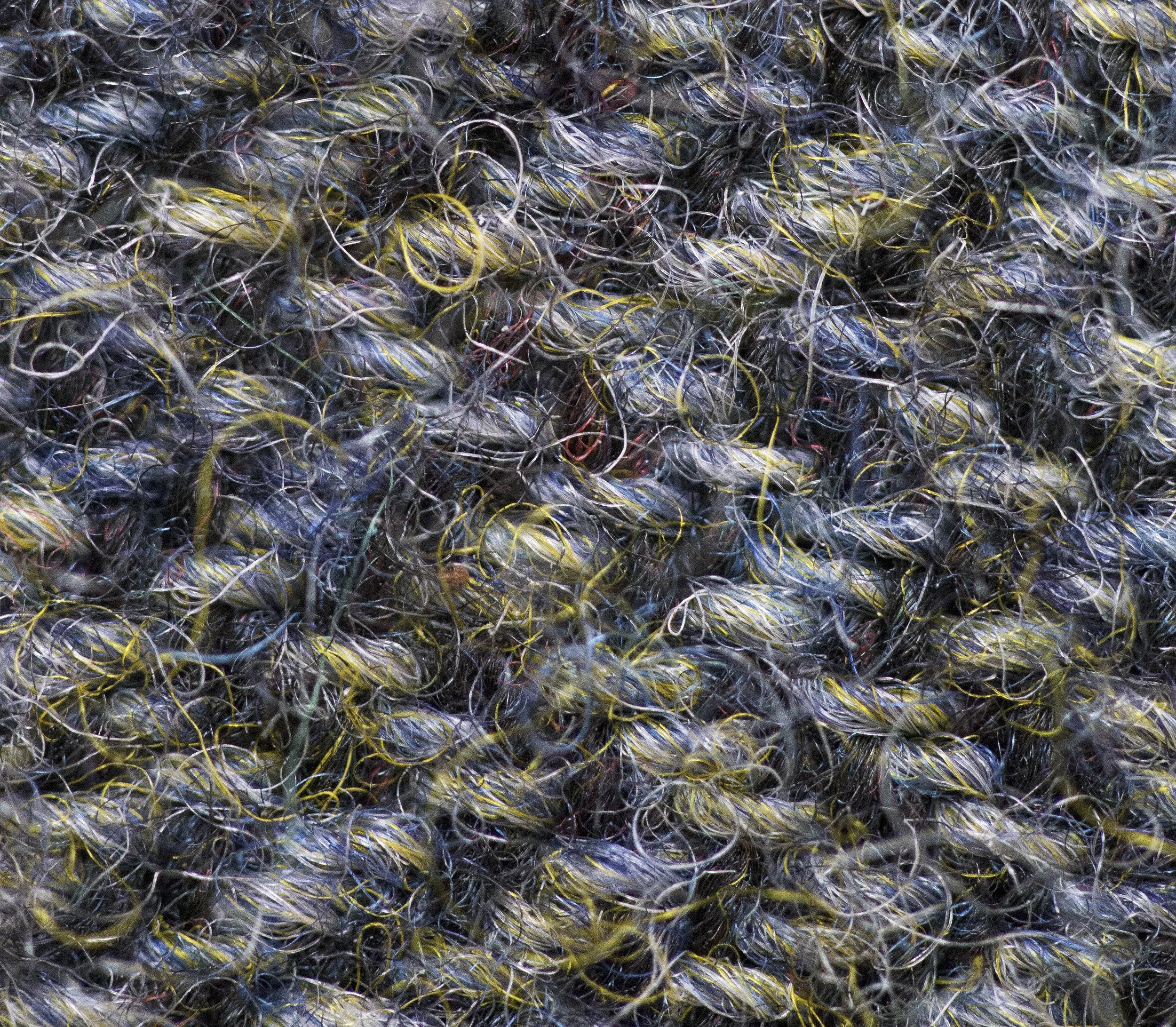
The cloth itself was born from usefulness. Dense wool and a textured weave suited the wind, damp and cold of the Hebrides. Those same qualities make tweed forgiving in a wardrobe, hiding wear, brushing clean and often improving with use.
A tweed jacket does not have to remain precious to remain good. Elbows can be repaired. Linings can be replaced. Buttons can change. A jacket can move from formal to slightly battered and arguably become more appealing along the way.
Perhaps that is what makes Harris Tweed feel so contemporary despite its history. Traceability, local production, craft and longevity are qualities fashion now spends enormous effort trying to explain. In this case, they are woven into the definition of the cloth.
CORDUROY TROUSERS
Corduroy may be the least glamorous member of this group, which is part of why it belongs here.
The ridged cotton cloth appears in English records by the eighteenth century and became associated with durable every day and working clothing. One of its most persistent origin stories is that “corduroy” comes from the French corde du roi, or “the king's cord” -almost certainly folklore rather than fact.
Corduroy's character comes from its raised ribs, or "wales", which give it warmth, texture and that an unusual ability to age gracefully. Knees soften, the pile shifts and the color becomes less uniform, yet the fabric often looks better for it. Corduroy can acquire rather than simply suffer wear.
That is also why a pair of corduroy trousers found in a vintage shop can look more convincing than a pristine pair on a rack. The fabric does not require perfection to be desirable.
Corduroy also asks surprisingly little of its owner. Wash it only when it needs it, mend a thinning pocket or an open seam, and a good pair of trousers can remain in rotation for years. Its durability isn't dependent on a specialist repair service. It comes largely from the cloth itself. Not every old fabric needs an elaborate origin myth. Sometimes durability is interesting enough.
KEEPING, NOT SHOPPING
Taken together, these clothes make an argument that has very little to do with nostalgia. The past was not automatically sustainable, and an old design is not environmentally virtuous simply because it is old.
What these pieces remind us is that maintenance once sat closer to the idea of ownership. Things were brushed, waxed, resoled, patched and altered because continued use was expected. That expectation may be more useful than another fall shopping list.
Before replacing the trench, look at the lining. Before retiring the waxed jacket, reproof it. Before discarding the boots, ask whether they can be resoled. And before buying the new version of something timeless, it might be worth checking the back of your mother's closet or the rack at the vintage store. Sometimes the heirloom wardrobe is already there.