

| The Longer View
THE TRANSPARENCY GAP
Companies already know far more about their products than most labels reveal. The question is not only what transparency costs, but who companies believe they owe it to.
WORDS BY NATHALIA ORQUERA * SEPTEMBER / 2026
A question of access
Most of us have looked at the label inside a piece of clothing and assumed that what it tells us is all there is to know.
There is a particular kind of quiet betrayal in discovering that a company already has answers to questions you didn't know you were allowed to ask.
I think about this most often in dressing rooms, not my own, but the ones I imagine on the other side of the Atlantic. A shopper in Paris picks up a cotton t-shirt, and somewhere next to the care tag or the website’s product page is an answer waiting: how much of the shirt is recycled, whether it will shed microplastics in the wash, and where its fabric was woven and dyed before becoming a garment. The company already knows all of this.
It had to. French law required it.
I pick up the same shirt in a store a few miles from where I'm writing this, and the label tells me almost nothing. Not because the information doesn't exist, it does, sitting in a supply chain database somewhere, verified, audited, already paid for. It tells me less because no comparable product-level disclosure regime is required.
This is not a story about a hidden scandal or a smoking gun. It's something quieter and, in its way, more revealing: a company deciding, garment by garment and market by market, how much its customers are owed in terms of disclosure.
In France, the answer is a great deal. Under the EU's coming Digital Product Passport, that answer will eventually become far more expansive. In the U.S., for the same brand, on the same day, in some cases from the same factory, the answer is often close to nothing at all.
The question worth sitting with isn't whether this is legal. It is.
The question is what it tells us about what transparency costs, and who companies decide they owe it to.
What France Already Requires
France has been quietly ahead of much of the world on this for years.
The Loi anti-gaspillage pour une économie circulaire or the AGEC law, passed in 2020 and its implementing rules require qualifying producers, importers and other companies placing covered products on the French market to make specified environmental information available electronically to consumers.
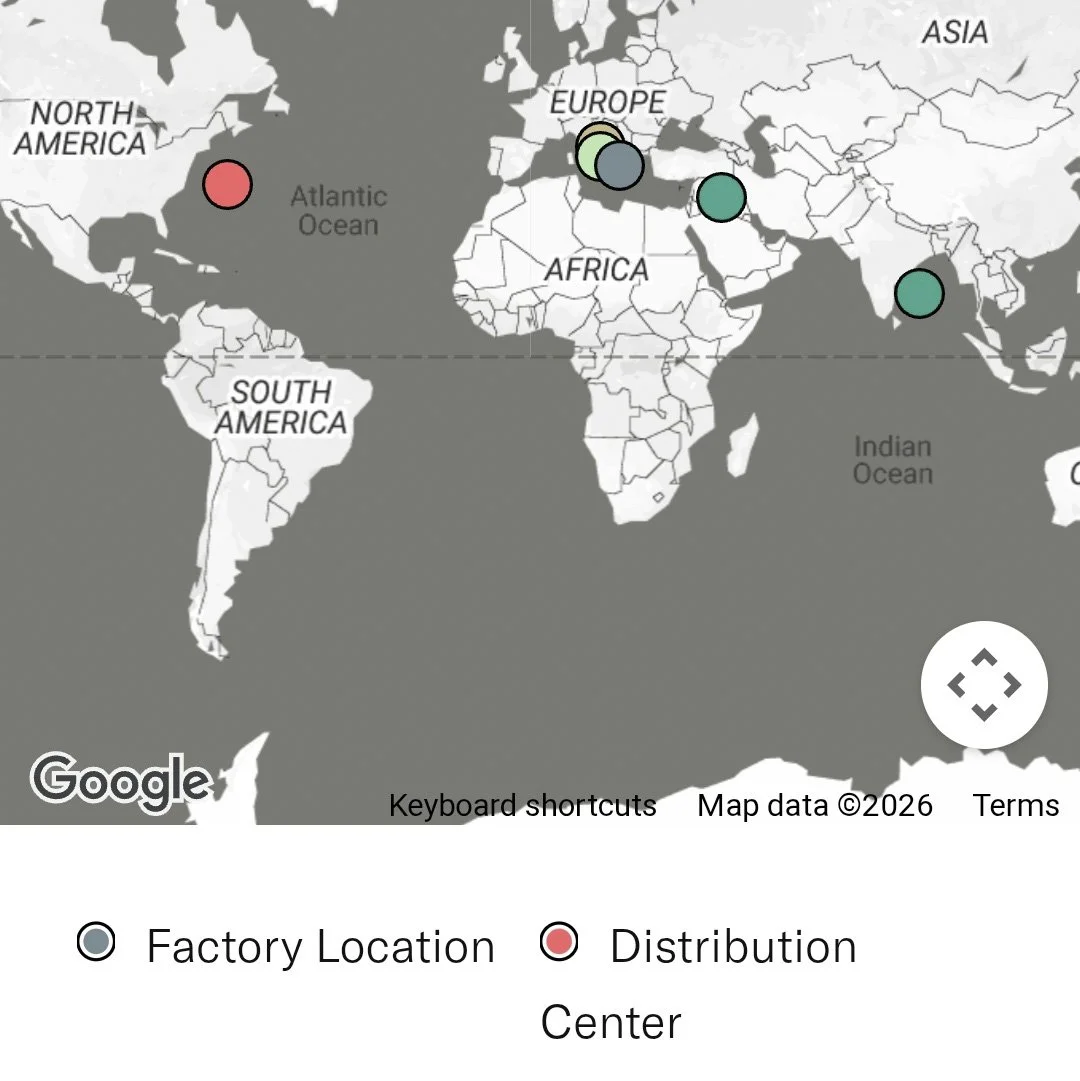
For textiles, the information can include the proportion of recycled material, certain hazardous substances, and the country where key production stages, weaving, dyeing and printing, and garment assembly principally occurred. Products containing more than 50 percent synthetic fibers by mass must also carry the prescribed warning that they release plastic microfibers into the environment during washing.
It applies regardless of where the brand is headquartered. A U.S. company placing covered products on the French market can be subject to the same requirements as a French company once it exceeds the applicable thresholds. This isn't a footnote regulation nobody follows. Non-compliance carries real fines, and the information has to be publicly accessible, not necessarily printed on a garment tag, but available electronically on a dedicated product page, and kept available for two years after the last unit of the product is placed on the market.
Where This Is Headed
France's law is, in a real sense, a preview of a broader shift. The European Union's Ecodesign for Sustainable Products Regulation, or ESPR, establishes the framework for Digital Product Passports: digital records designed to make product information accessible across a product's life cycle.
The system is being introduced product category by product category. The EU's DPP infrastructure is already being put in place. Textiles will eventually follow.
For apparel, the European Commission currently expects to adopt the textile-specific ESPR delegated act in the second half of 2027. Importantly, that is not the date when every garment suddenly needs a passport. Once a delegated act is adopted, companies generally receive a transition period before compliance becomes mandatory, and the Commission has indicated that implementation timelines may still evolve. The final legally binding compliance date for textiles has therefore not yet been fixed.
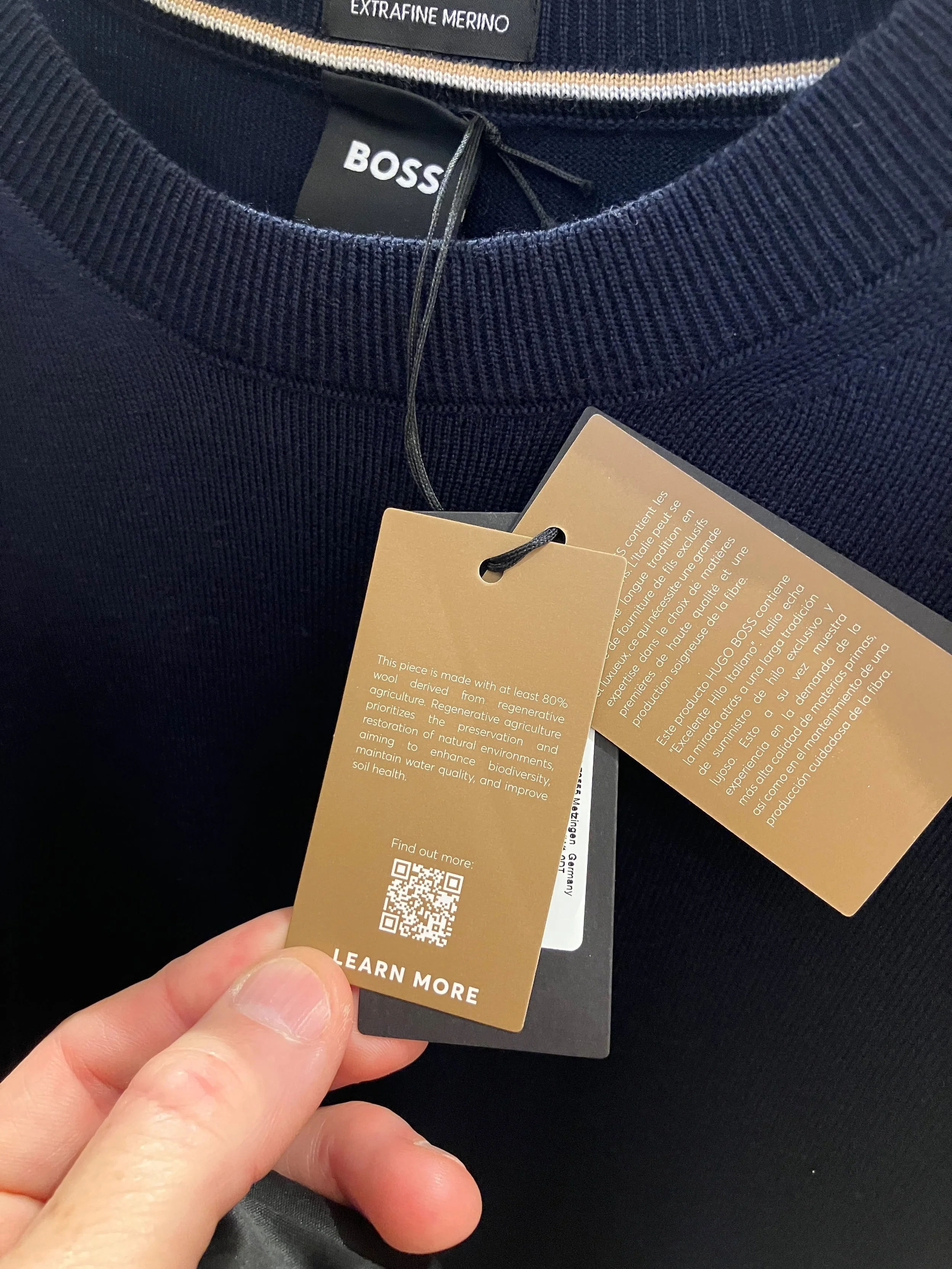
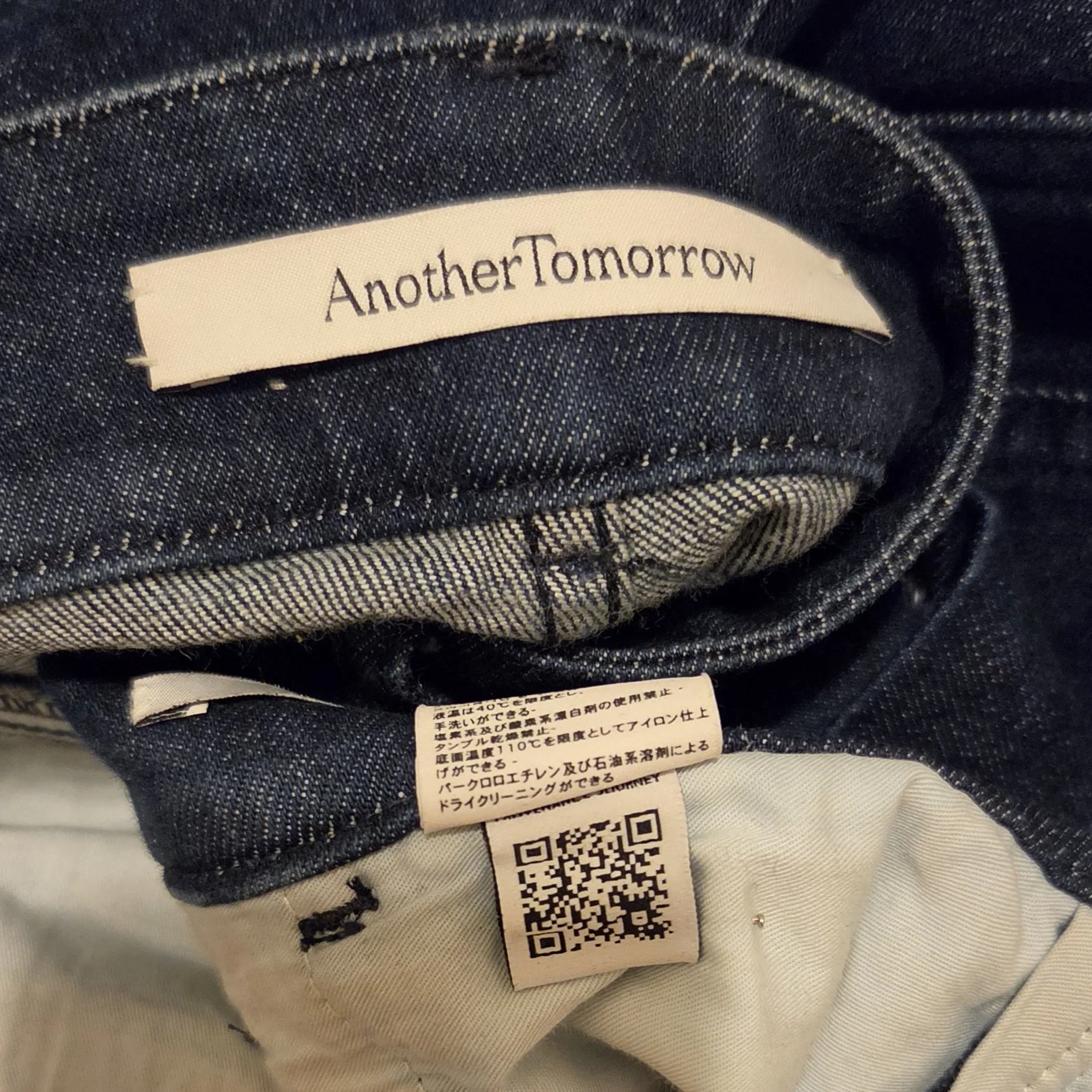
What will the passport look like? The basic idea is straightforward: a consumer will access a digital record associated with the product through a machine-readable data carrier. A QR code is one possible form, though the final textile requirements, including how information will be presented, are still being developed.
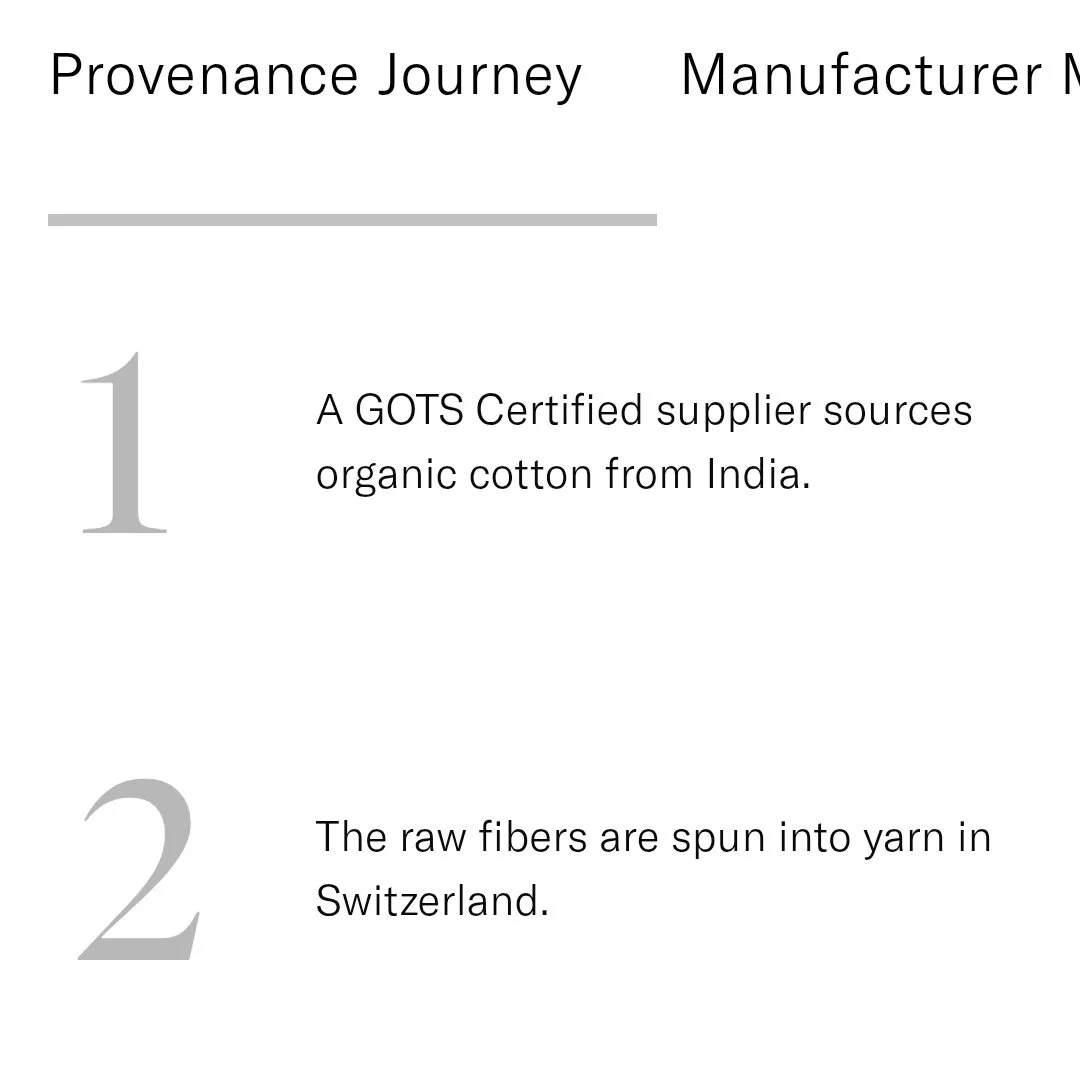
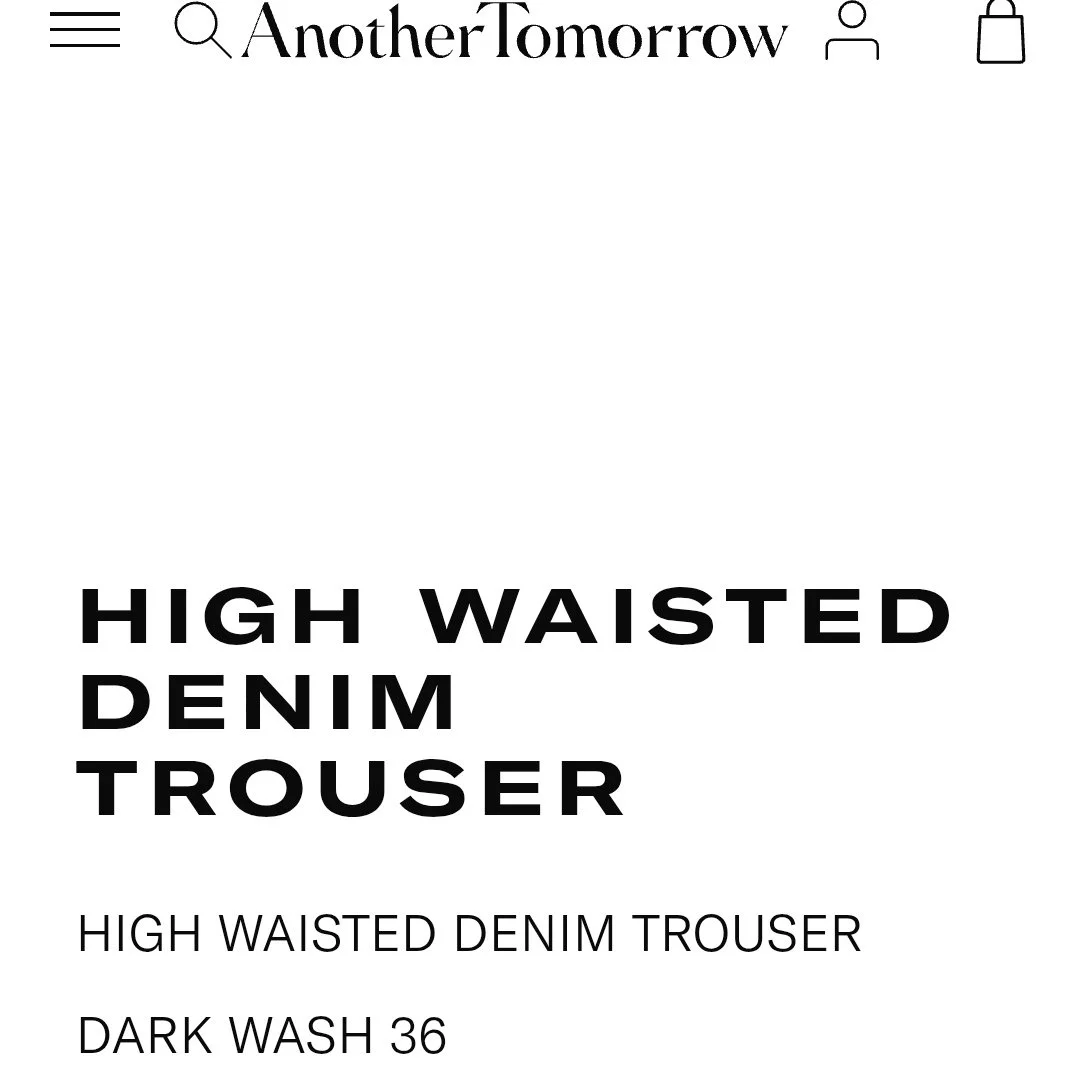
Some brands are already experimenting with garment-level digital identities. Another Tomorrow, for example, offers a useful glimpse of what product-linked digital transparency can look like in practice. It should not, however, be mistaken for the final EU-mandated textile DPP format: those rules are not yet settled.
Why the Same Company Discloses Differently
Here is the part that's easy to get wrong in either direction.
It would be too simple to say brands are "hiding" something specific from American consumers, some smoking-gun fact they'd rather we not know. The more accurate explanation is less dramatic: building the systems to trace a garment's materials and origins costs real money, and companies generally build that infrastructure only where it's legally required. There's also a legal logic at work: making specific public claims can expose a company to greater liability if those claims cannot be substantiated. Staying vague has, perversely, often been the safer choice.
But once a brand has already done the work, it has already traced a shirt's fiber content and origin for French compliance, the cost argument mostly falls away. At that point, withholding the same information from American customers becomes a decision, not a constraint. It's not concealment of some hidden fact so much as it is a demonstration of what companies do when the law simply doesn't ask them to bother.
This is where it's worth widening the lens for a moment. The regulatory gap between the two markets isn't an accident; it's policy. The EU is moving towards comprehensive, mandatory disclosure across nearly every dimension of a product's life from traceability to circularity. The United States currently has no federal textile Digital Product Passport regime comparable to the system being developed under ESPR.
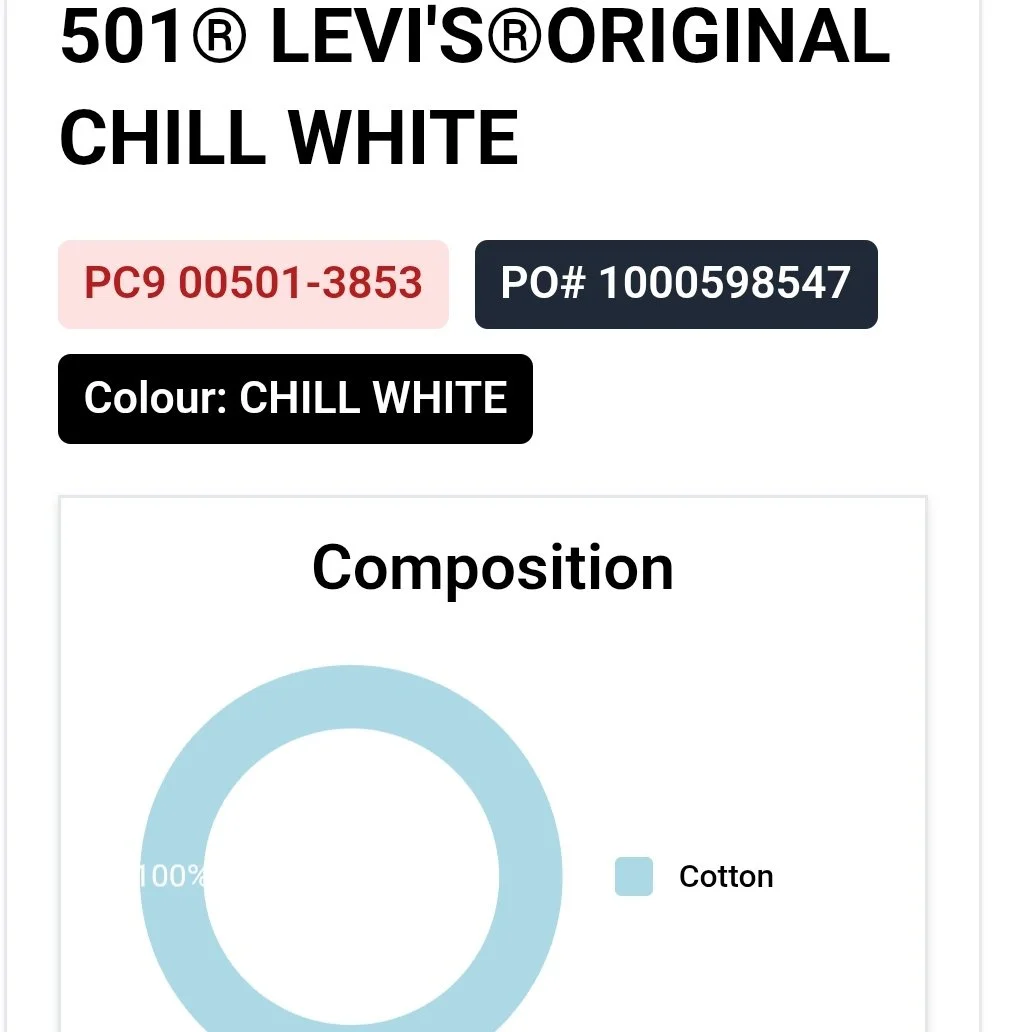
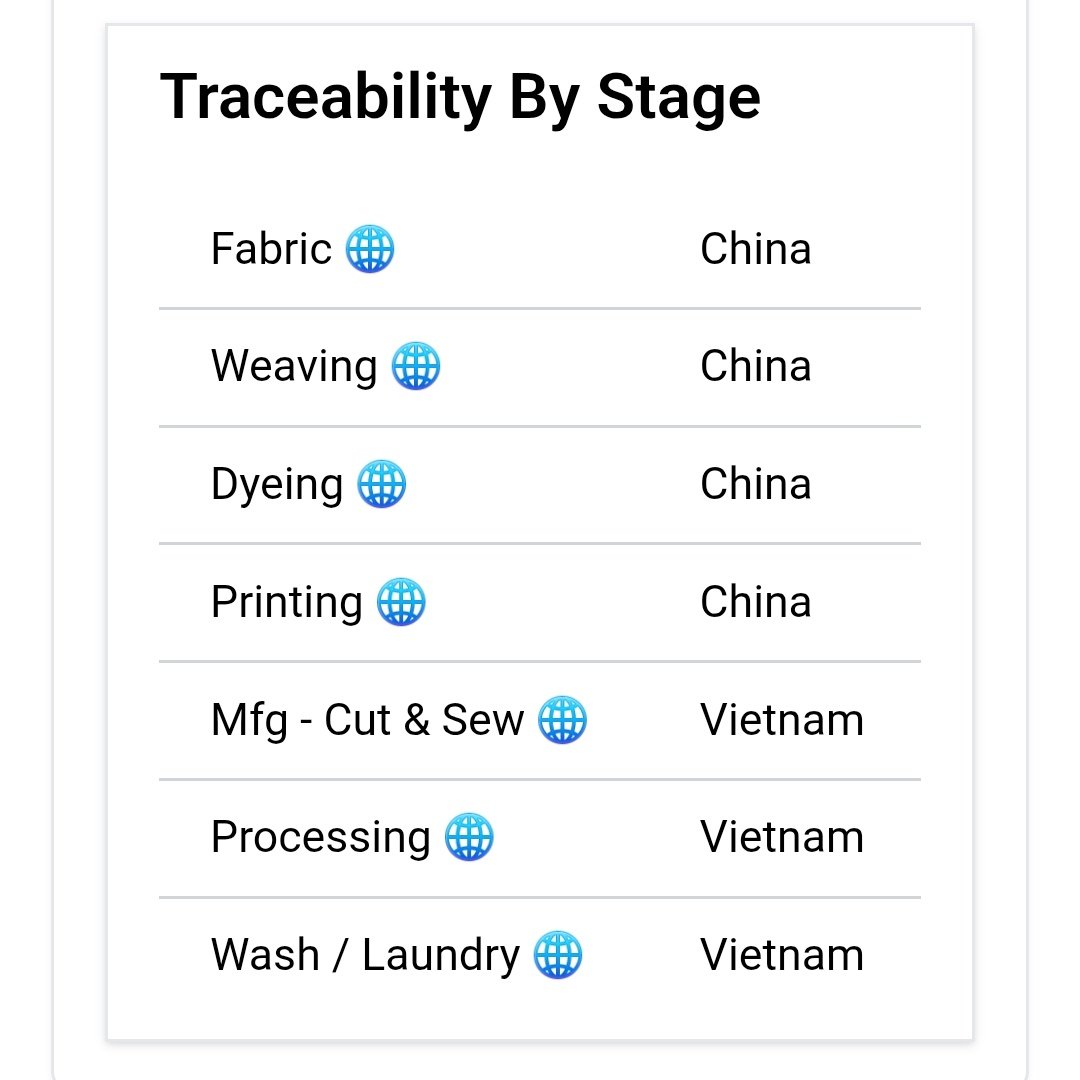
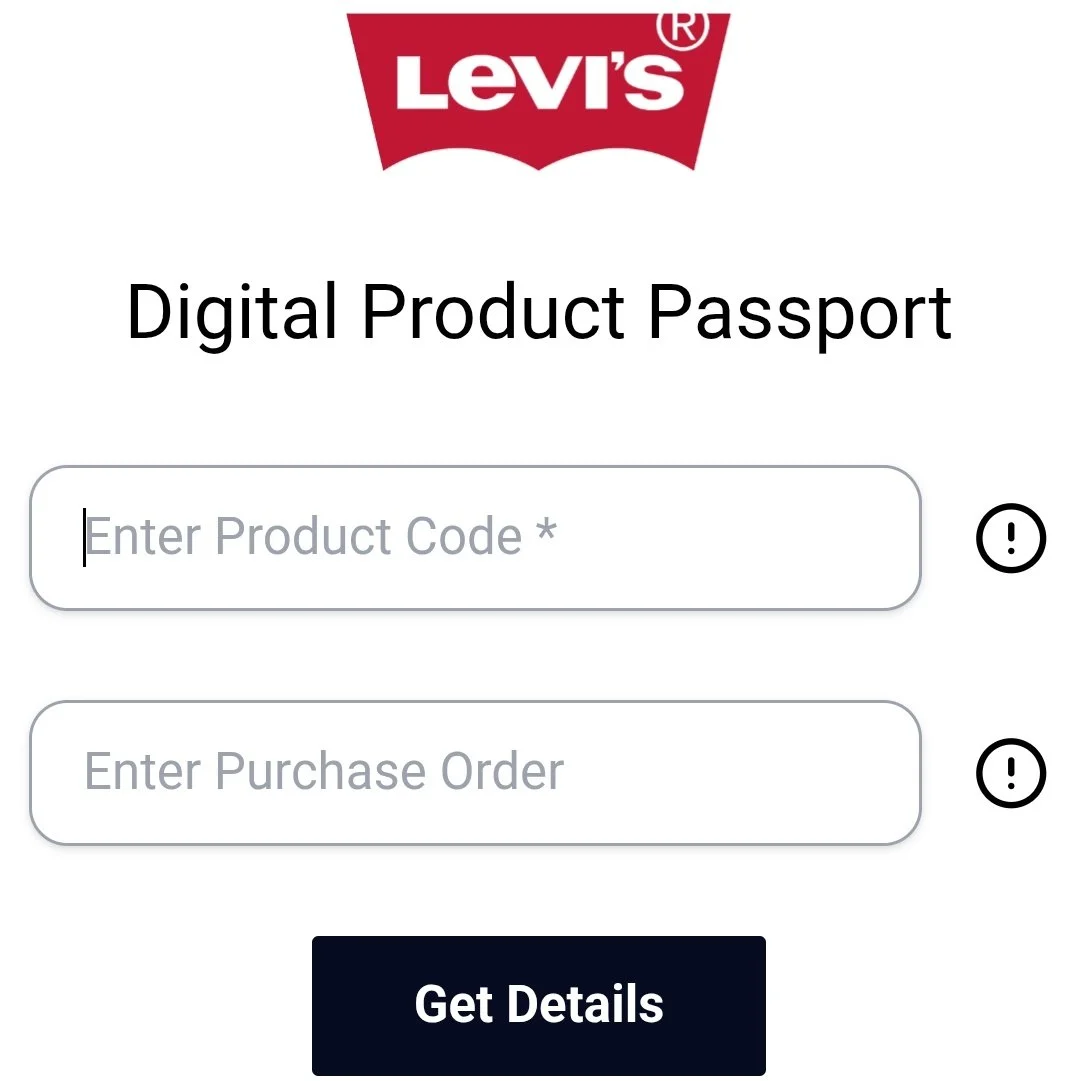
Levi’s 501 product information shown to shoppers in France.
One Pair of Jeans, Two Markets
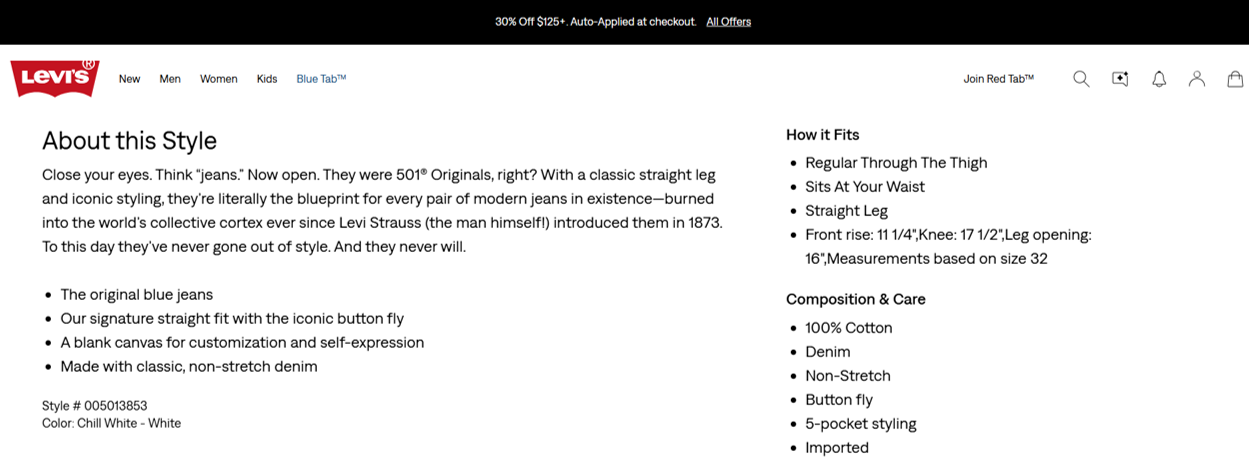
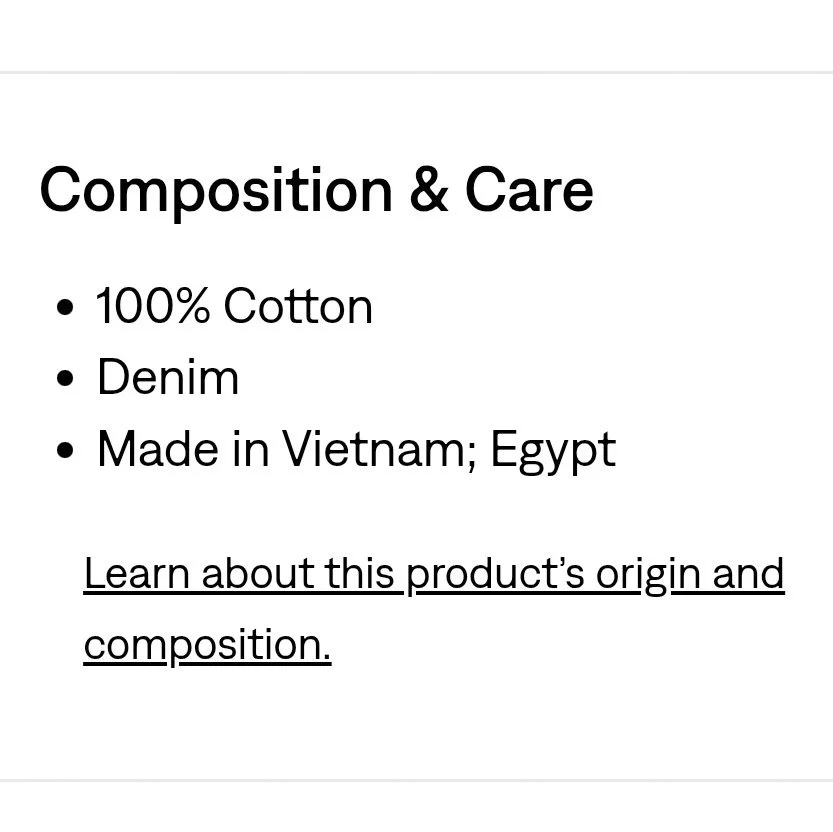
Levi’s 501 product information shown to U.S shoppers.
The difference is not entirely theoretical. A useful example is Levi's 501. On the U.S. product page we examined, the shopper is given the familiar composition and care information and a country-of-manufacture statement. The corresponding French product page for the same Levi's style number directs shoppers to additional information about the product's origin and composition.
That comparison needs one caveat: a matching style number does not prove that the individual jeans sold in the two markets came from the same production batch or factory. In fact, the manufacturing-country information we observed differed. The point is not that the physical jeans are identical. It is that the same global style is accompanied by a different disclosure environment in the two markets.
“If a company already knows, and already discloses, why should geography determine what you're allowed to know?”
What This Means for the Reader
None of this means American shoppers are without options.
Some of the information European regulation brings into the open may still be reachable from the United States. A brand's French product page can contain or lead to product information that is not presented in the same way on its American site. It takes a moment of searching, and it isn't information most people know to look for, but it exists.
The more direct option is even simpler: ask. Email the brand. Ask why information available to a French customer is not available to you. This is, in miniature, the instinct behind movements such as Fashion Revolution's #WhoMadeMyClothes campaign and the recognition that transparency does not always arrive voluntarily. Sometimes it arrives because enough people kept asking the question.
The shirt on the rack in Paris and the shirt on the rack here may be identical in every way that matters to the eye. What's different is not the garment -
It's how much information the company decided you were entitled to have.
Status note:
Regulation in this area is evolving quickly. This article reflects legislation and European Commission implementation timelines in effect or announced as of September, 2026.
Primary sources consulted:
1. France: Décret n° 2022-748 du 29 avril 2022 and current Code de l'environnement provisions on environmental product information.
2. European Commission: Digital Product Passport; Textile apparel; Economic operators, current implementation timeline and transition guidance.