
| 03 SEASONAL TABLE
Panzanella: Before We Called It Zero Waste
A Tuscan dish built around stale bread, ripe tomatoes, and the old logic of using what is already there.
WORDS BY NATHALIA ORQUERA * SEPTEMBER / 2026
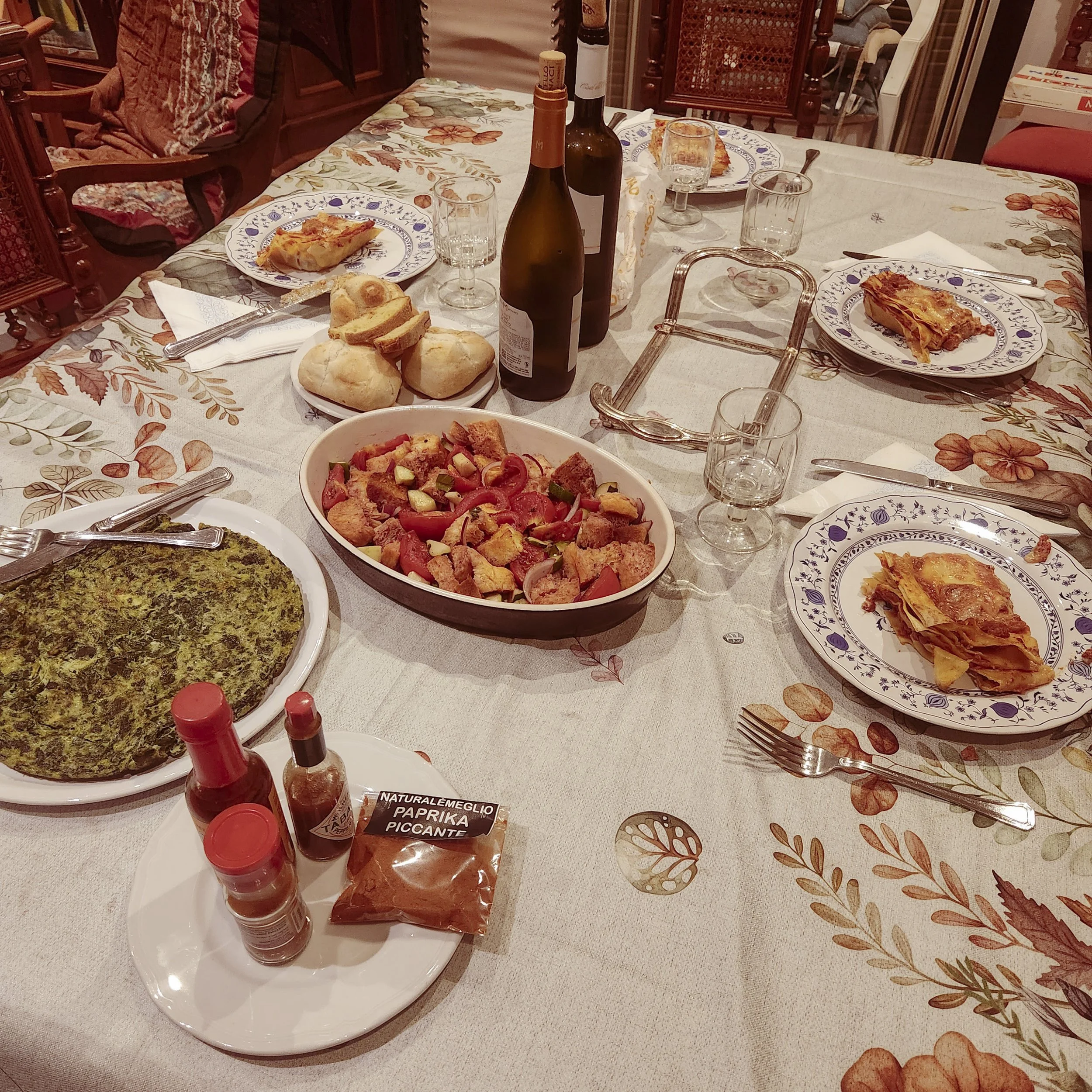
There's a moment in every Italian kitchen when the bread has gone stale, the tomatoes have gone soft, and most people would call it spoilage. I first understood this on a trip through Tuscany, watching someone's grandmother turn exactly that into dinner, without a second thought, the way you'd only do something you've been doing for years.
Panzanella isn't a trend. It's older than the word sustainability, older than zero waste as something you'd see on a tote bag. It's simply what you did with what remained in the pantry. At its heart is stale bread given another life, combined with the best of the season: ripe tomatoes, basil, onion, and, depending on the household, cucumber. It is less a recipe than a way of looking at what is available to you.
That's the part I keep coming back to: this dish was never about virtue. It was about making something good from what was already in the kitchen and recognizing that an ingredient past its most photogenic moment may simply be better suited to something else.
THE LOGIC OF THE UGLY TOMATO
Ask any cook and they'll tell you that a very ripe tomato can be an advantage here. Once salted, it releases the juices that become part of the dressing. The softer the tomato, the more willing it is to give the bread its flavor. A pristine tomato holds its juice jealously. An overripe one hands it over.
The bread works by the same logic. Traditional Tuscan panzanella uses stale bread softened with water, then squeezed and crumbled before being mixed with the vegetables. Fresh bread doesn't behave the same way. Staleness, in this case, isn't a defect to disguise; it's the reason the dish works.
"Waste is a failure of the imagination."
Douglas McMaster, chef and founder of Silo, TEDxISM
It's hard to think of a dish that proves this better than panzanella. The tomato didn't become useless because it softened. The bread didn't become garbage because it dried out. They simply found a different purpose, and dinner begins with recognizing that possibility.
WASTE, RECONSIDERED
Not every scrap needs to go into the salad to avoid becoming waste. Clean onion trimmings, herb stems, and other vegetable odds and ends can be kept in the freezer for a future broth. The point isn't to force every peel or stem onto the plate. It's to pause before deciding that its only destination is the bin.
A DISH FOR RIGHT NOW, TOO
It's easy to romanticize this instinct as something that belonged to another generation. But perhaps what has changed most is our expectation that food should look new, unblemished, and identical. Panzanella quietly resists that expectation. A ripe tomato, a day-old loaf, a handful of herbs nearing the end of their best moment: none of them are done. They're simply waiting for someone to see them in a new light.
No recipe card can fully capture a dish like this because panzanella has always varied from kitchen to kitchen. Think of the recipe below as a place to start: use good stale bread, the ripest tomatoes you have, dress it simply, let it rest, and taste as you go.
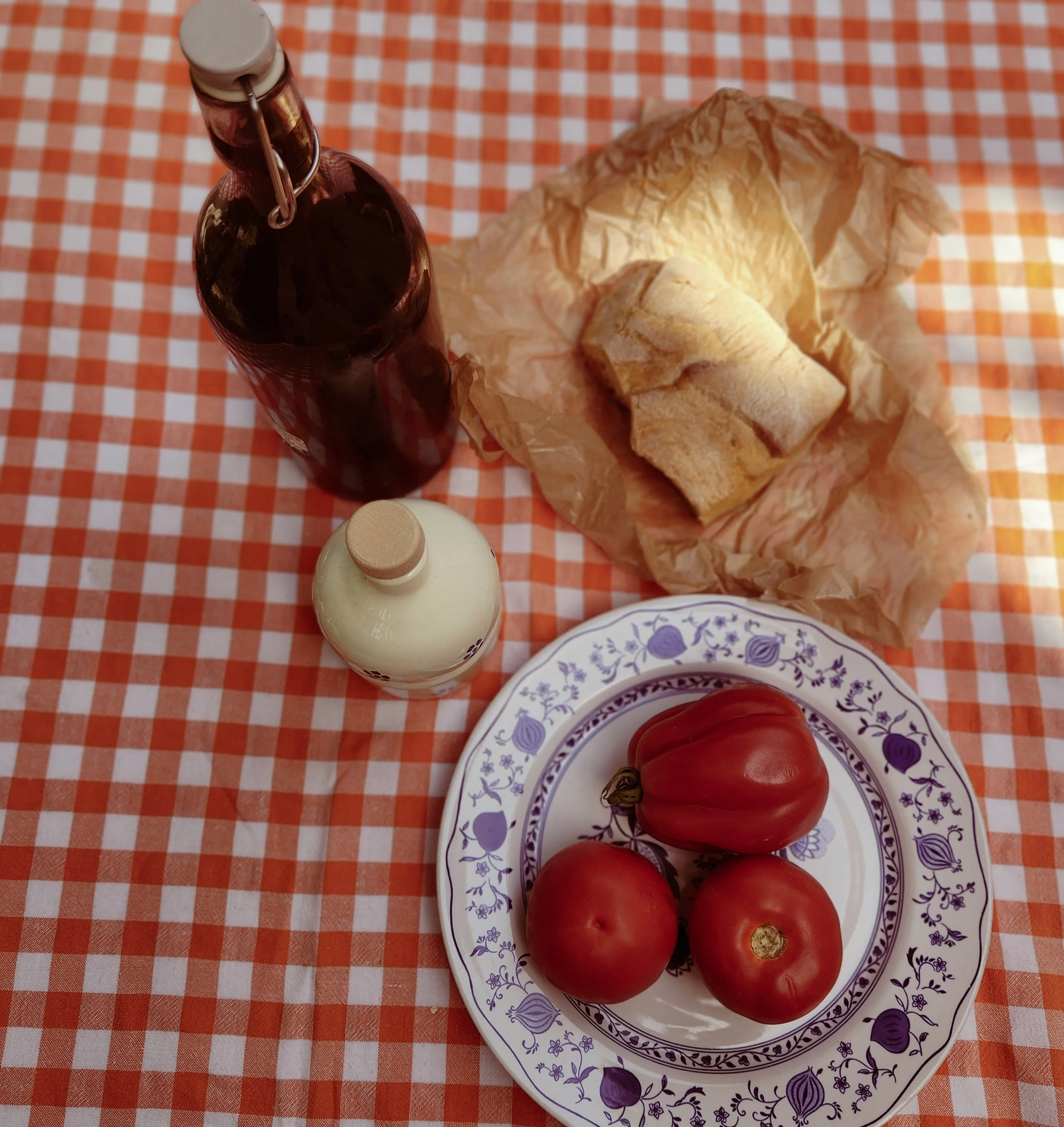
PANZANELLA
A practical version for the home kitchen
WHAT YOU WILL NEED
•300 g (about 10 oz) stale country-style bread, preferably a few days old
•2–4 very ripe tomatoes, depending on size
•1 small red onion
•1 cucumber
•A generous handful of fresh basil leaves
•Extra-virgin olive oil
•Red wine vinegar
•Salt and freshly ground black pepper
HOW TO PREPARE IT
Soften the bread. Break the stale bread into pieces and place it in a large bowl. Cover with cold water and leave for about 10 minutes, until softened.
Prepare the vegetables. While the bread soaks, thinly slice the red onion. If you prefer a gentler flavor, soak the slices briefly in cold water and drain. Chop the ripe tomatoes and slice or dice the cucumber.
Squeeze and crumble. Lift the softened bread from the water and squeeze it well with your hands to remove the excess. Crumble it into a clean serving bowl.
Bring it together. Add the tomatoes, cucumber, drained onion and basil, torn by hand.
Dress simply. Season with salt and black pepper, drizzle generously with extra-virgin olive oil and add a small splash of red wine vinegar. Toss, taste and adjust.
Let it rest. Leave the panzanella for about 30 minutes before serving so the flavors can settle into one another. Serve cool or at room temperature.
There is no need for perfect tomatoes or perfect cubes of bread here. Panzanella is forgiving by design. Use what you have, taste as you go, and let the ingredients tell you what they need.