
| 01 SLOW TRAVEL
In Ischia, Before Wellness Had a Name
Long before wellness became an industry, people came to Ischia for its thermal waters. Deep inside a gorge, Cavascura still offers something increasingly rare.
WORDS & PHOTOGRAPHS BY NATHALIA ORQUERA * SEPTEMBER / 2026
Everyone wants to go to Capri. It's the sister who walks into the room and the room rearranges itself around her, the yachts, the lemon groves photographed into submission, the piazzetta where being seen is the whole point. Capri doesn't have to try, and that's exactly why everyone tries so hard to get there.
I have been to Capri. And I have been to Ischia. But between the two, Ischia is my first choice.
Ischia is the other kind of beautiful, the kind that doesn't perform. It's rugged where Capri is polished, quiet where Capri is a party, green where Capri is white stone and blue sea. There's more nature here and less spectacle: thermal springs instead of infinity pools, footpaths instead of red carpets rolled out for tenders. If Capri is beauty that wants an audience, Ischia is beauty that would honestly prefer you didn't come at all, which is, of course, exactly why you should.
This is quiet luxury in its truest sense, not the version that's become a marketing term. Not fewer logos on more expensive things, actually less. Less produced, less curated, less certain of its own importance.
And nowhere on the island says that more plainly than a place most visitors never find their way to: Antiche Terme Romane di Cavascura.
Ischia has long been known for the healing tradition surrounding its thermal springs. The whole island sits on volcanic ground that has drawn people to its waters for centuries. Much of that tradition now lives inside spas, hotels and thermal parks. Cavascura is where the history still feels like something you can experience, not just read about.
THE WALK IN IS THE POINT
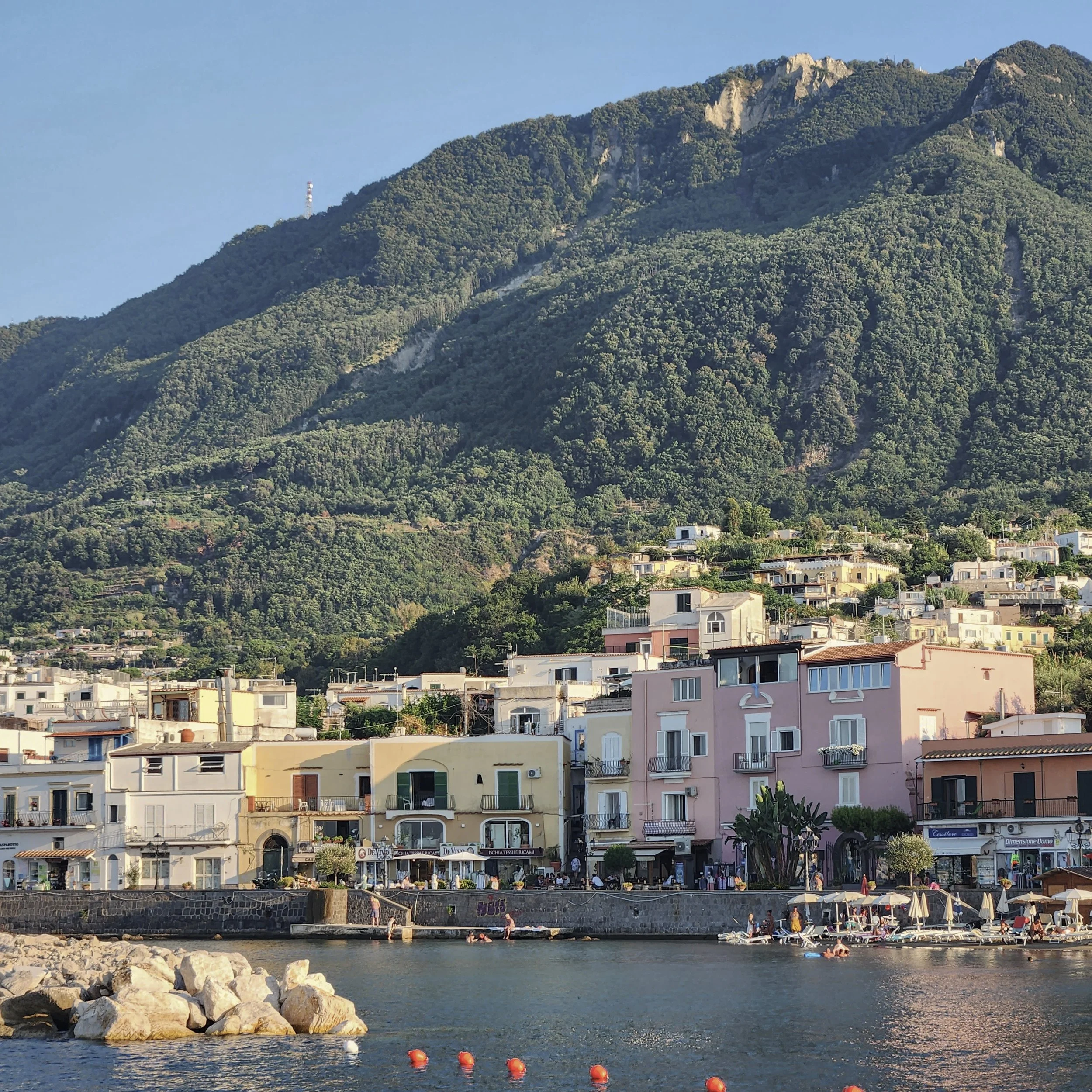
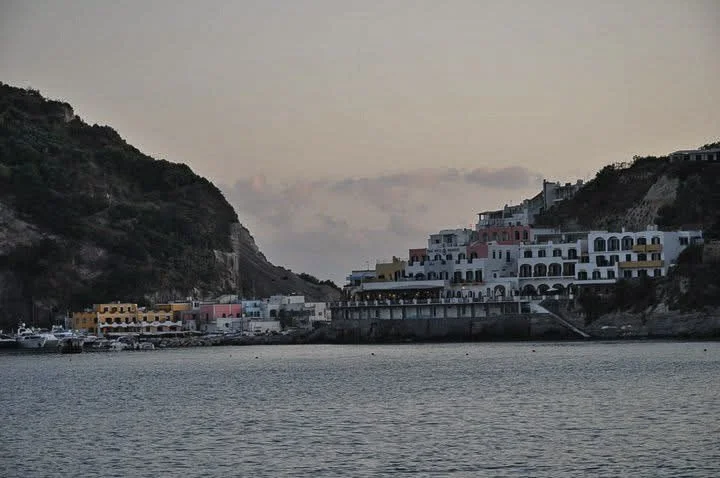
To get there, you can drive to Maronti Beach and walk from there, or take a water taxi from Sant'Angelo, a short crossing, the island sliding past in orange, white and blue, houses stacked into the hillside as though they grew there instead of being built.
The water taxi drops you at the beach and from there you walk up. Either way, you arrive a little out of breath, a little unsure you're going the right way, and that uncertainty is not a flaw in the experience. It is the experience.
Every proper spa I've been to hands you a robe at the entrance and calls that the transition. Cavascura makes you earn the transition instead.
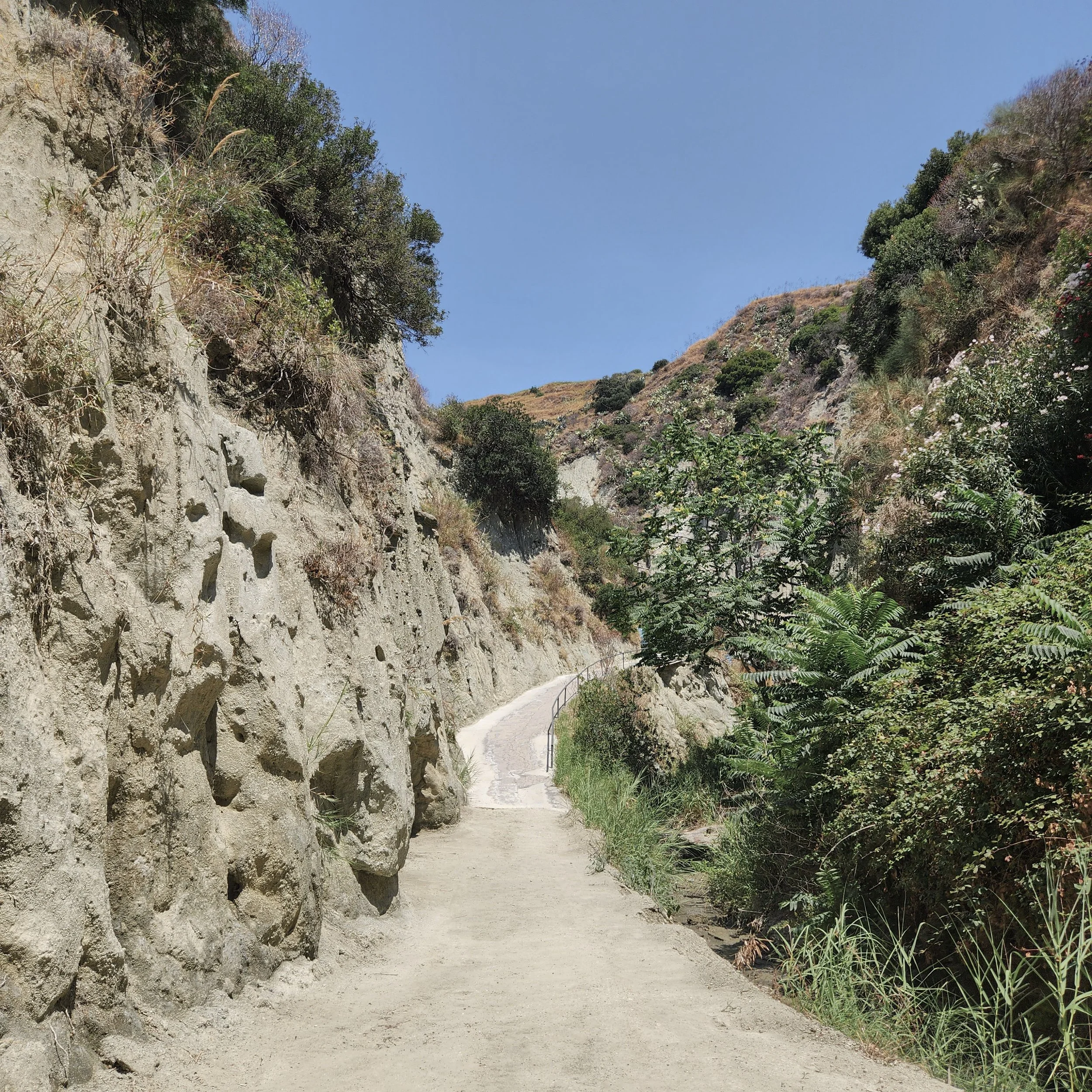
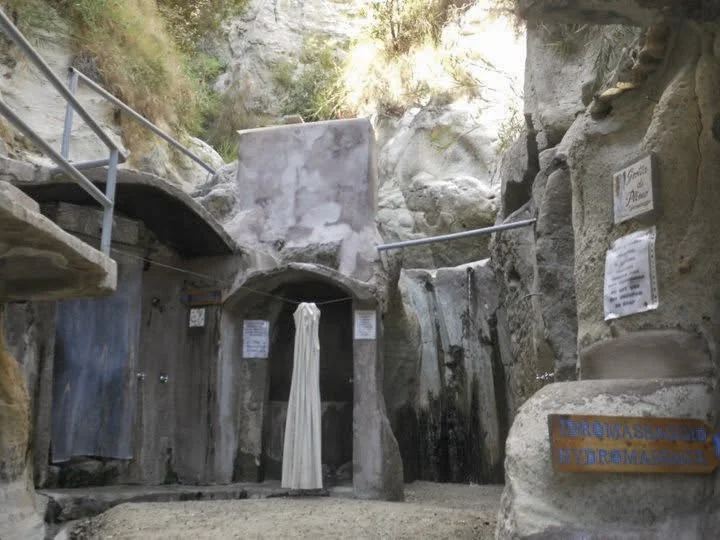
The path threads through a natural canyon, past rock formations shaped by time and vegetation that has claimed every ledge it can reach, until the canyon narrows into the gorge itself. By the time you reach the caves, something in you has already slowed down without being asked to.
THE UN-SPA
Inside, there's no product line, no branding, no diffuser pretending to be nature. Just hot, mineral-rich water coming straight out of the rock, doing what it has done since long before anyone thought to package wellness and sell it back to us.
Nothing about Cavascura feels as though it has been designed to impress you. The stone, the caves, the steam, the water; the place takes its cues from the geology rather than the other way around. That's a strange thing to encounter in 2026, when so much of what is marketed as wellness has been engineered to feel exactly this effortless.
Here, it actually is.
Cavascura also closes for the winter. The season follows the place rather than our expectation that everything worth visiting should be available on demand.
WHO IS THIS ACTUALLY FOR
If what you want is a five-star robe and treatments with French names, Cavascura will probably disappoint you.
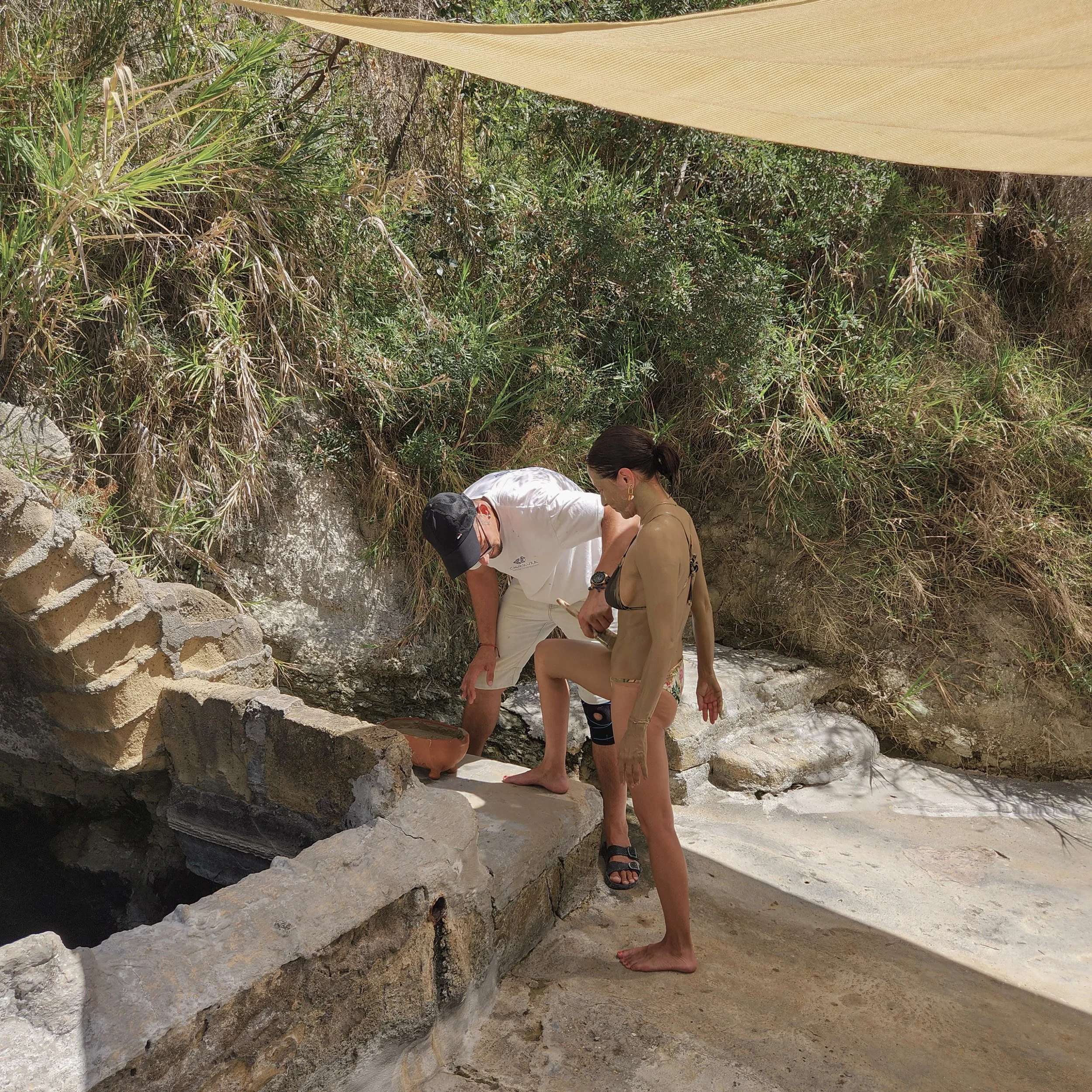
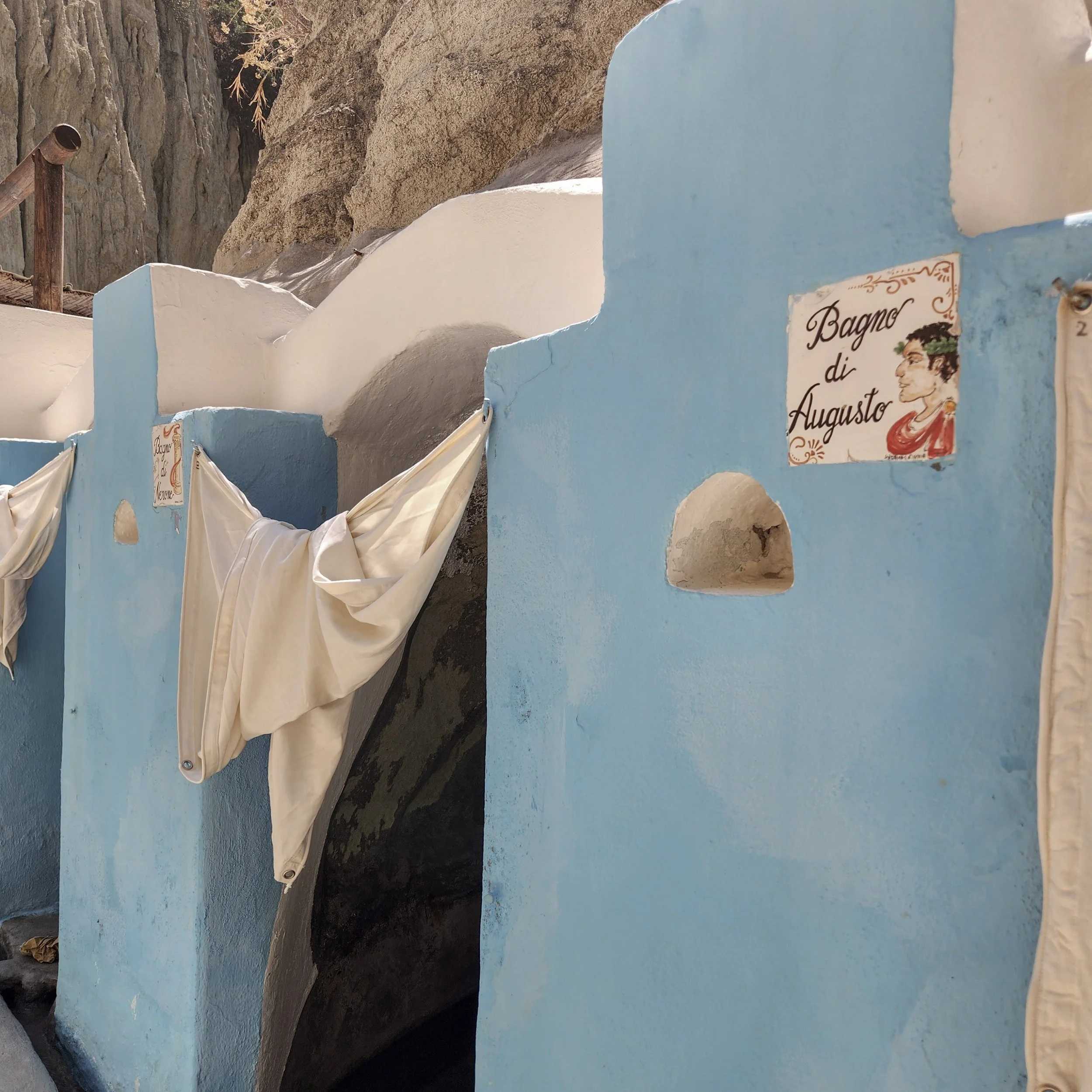
Don't misunderstand me: there is a treatment menu. There are massages, thermal baths, mud treatments and places to rest. It's the setting that's different.
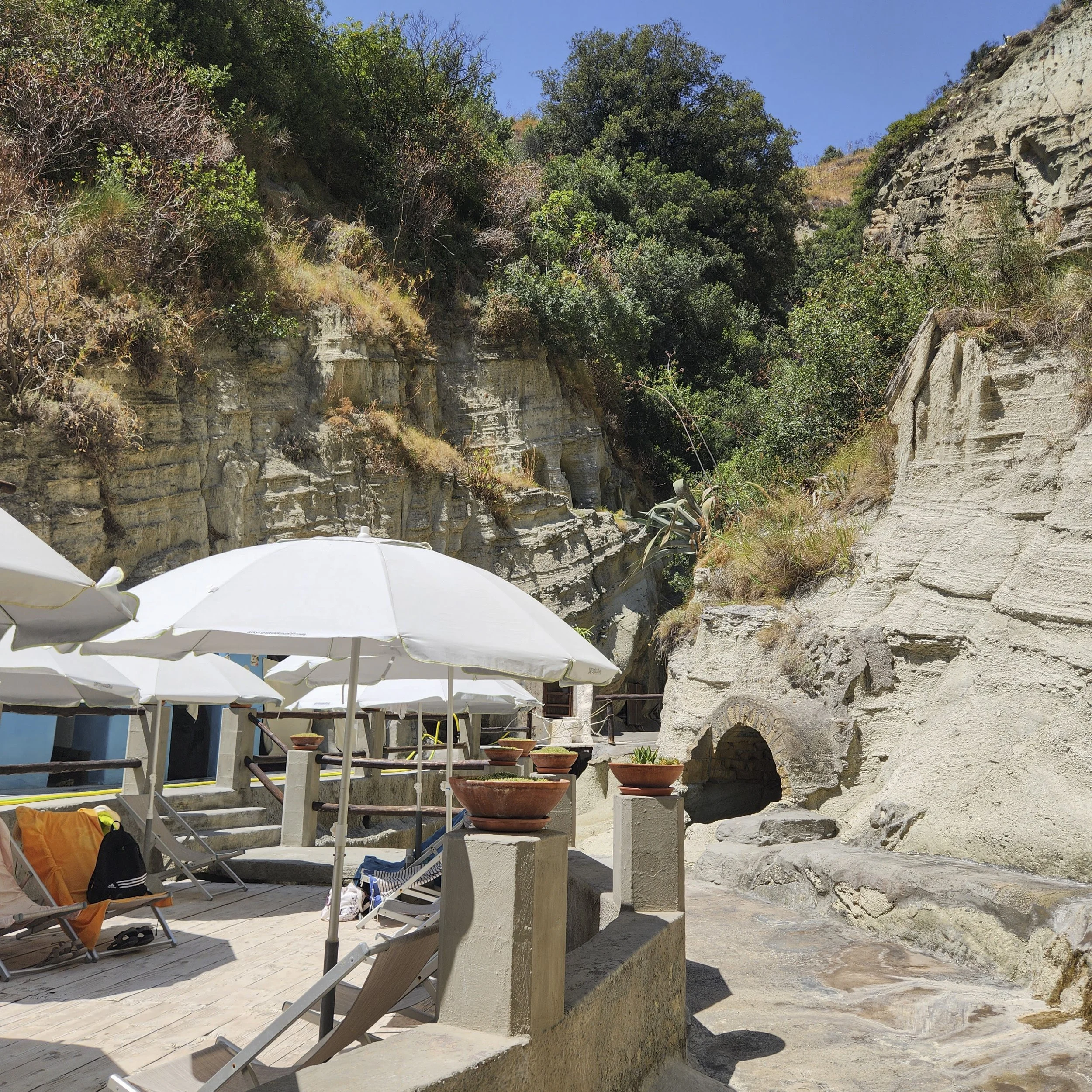
Bathing happens in stone basins carved into the rock. Steam gathers inside a natural grotto. Thermal water comes down through the gorge. The view is greenery and stone; the soundtrack, water.
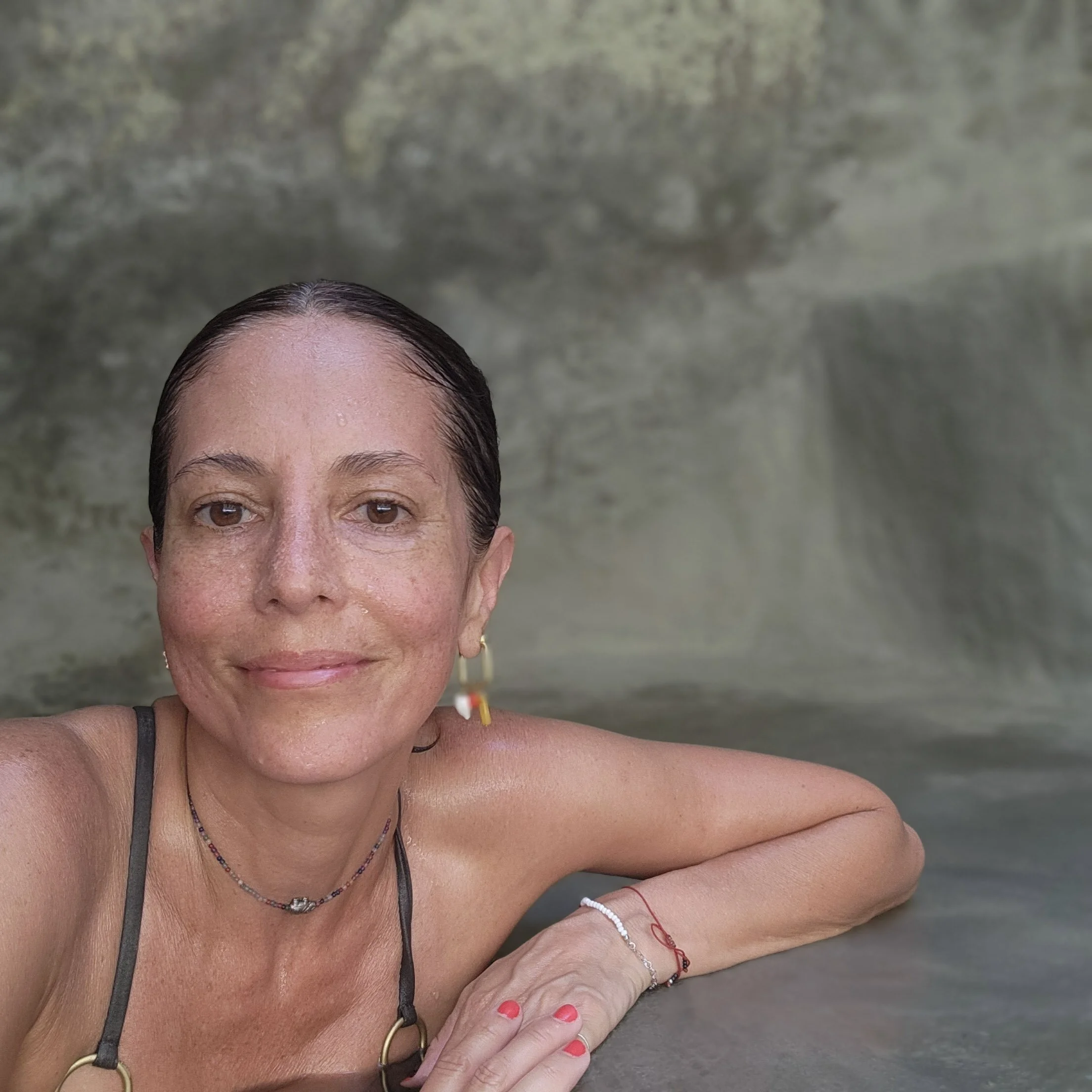
Once you're welcomed by the staff, you choose the prescription that your body needs. Mine was the full-body thermal mud treatment, followed by the hot water of the waterfall and the steam of the grotto. Then a bath, and eventually a nap in the shaded lounging area.
There is very little choreography to it. And maybe that's why it works.
BEFORE WELLNESS HAD A NAME
Ischia’s relationship with thermal water stretches back to its ancient Greek settlers, and Cavascura’s springs later flourished under the Romans. By 1588, the physician Giulio Iasolino documented the island’s springs and their therapeutic uses, confirming what people had understood for centuries: they came not only for pleasure, but for remedy.
Cavascura feels like the physical memory of that history. Its thermal source emerges within a tuff gorge, among caves and bathing spaces cut into the rock. What is remarkable isn't that someone has managed to recreate an ancient bathing experience. It's that so much of the experience still begins with the same things: rock, heat and water.
The source never went anywhere.
“Cavascura is where the history still
feels like something you can experience,
not just read about.”
THE WALK BACK
When you leave Cavascura, there is no marble lobby waiting for you, no car idling at the entrance. You walk back through the gorge the same way you came in.
There's the cave, the hot water moving through the rock, and a walk you'll remember more than most hotel lobbies you've stood in. It isn't polished, and that's precisely the point. Cavascura doesn't need to manufacture an atmosphere or tell you how to feel about it. It has been here, doing much the same thing, for centuries.
You just have to make the walk.